
Last updated November 23, 2026
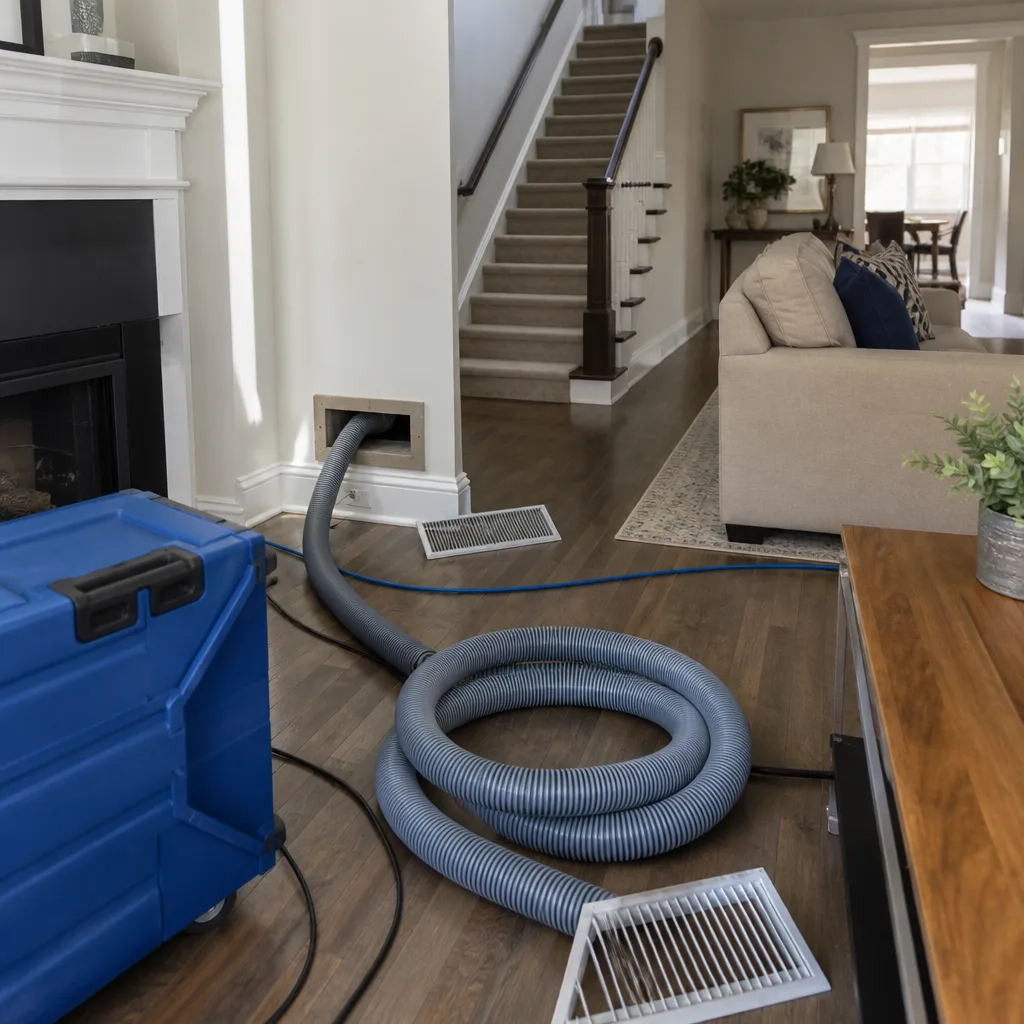 Whole-home duct cleaning
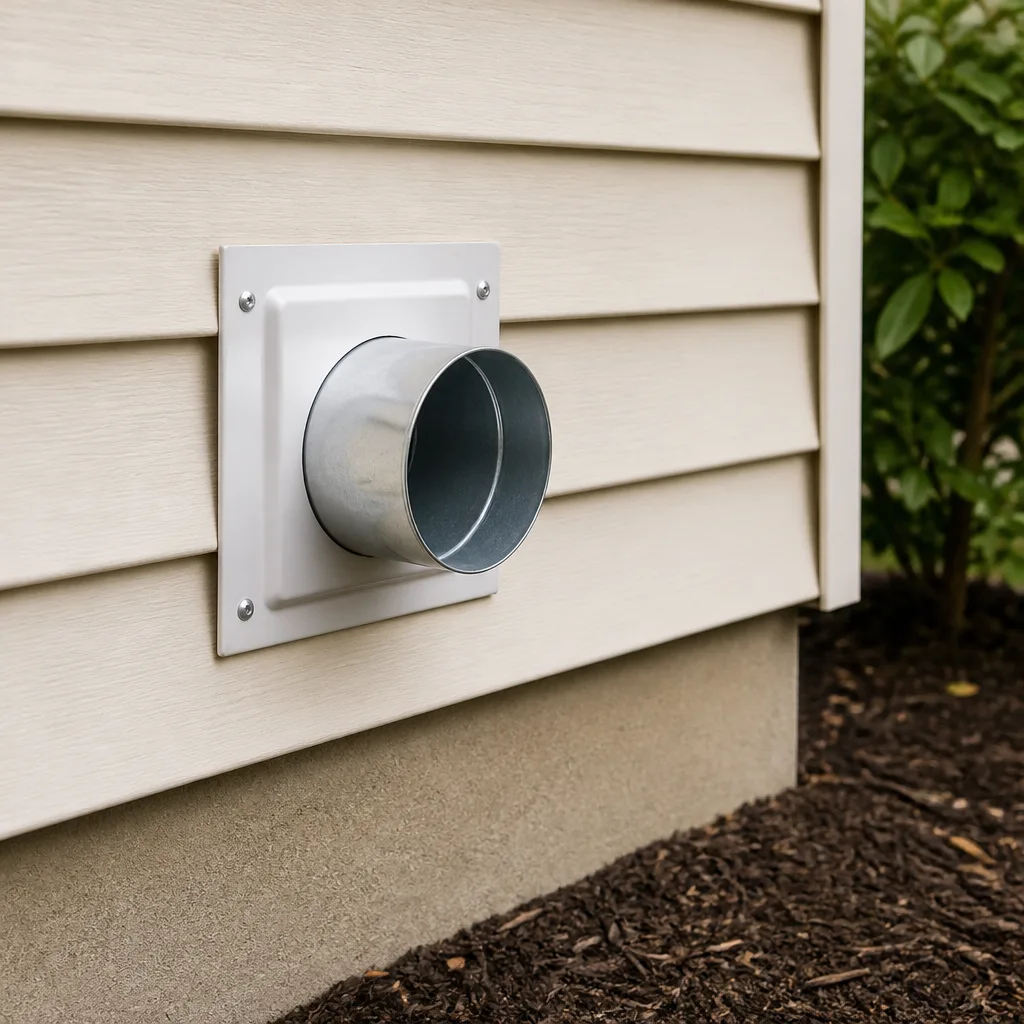 Dryer vent cleaning
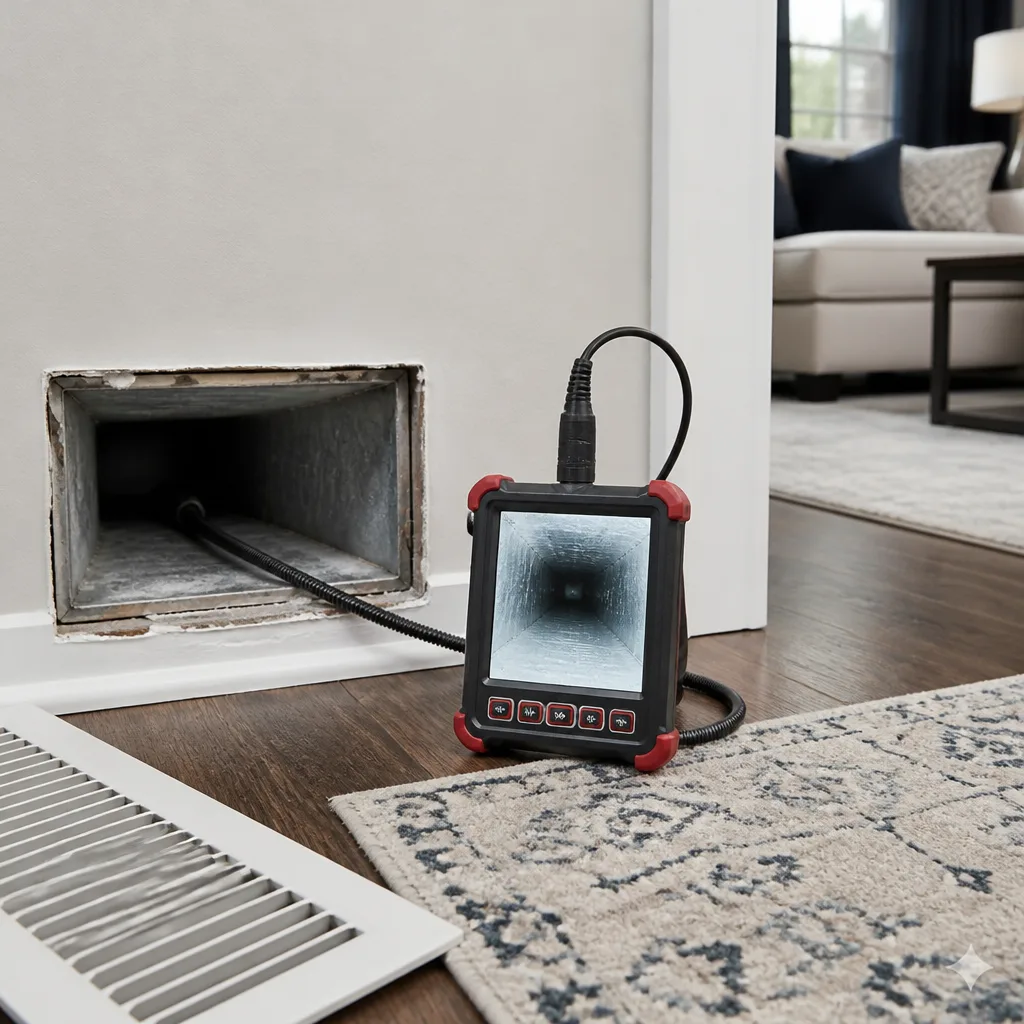 Camera inspection
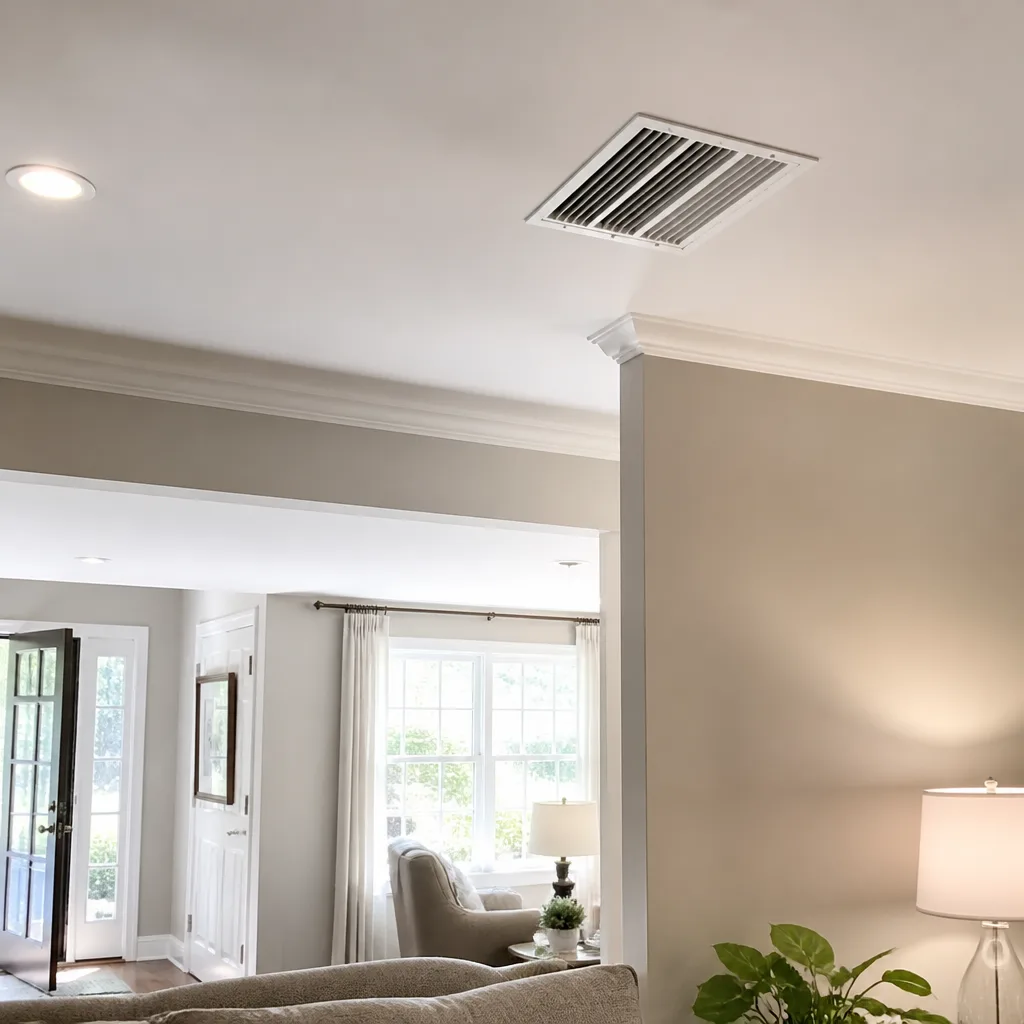 Sanitizing & deodorizing
Whole-system duct and dryer vent check with before-and-after photos - you see exactly what came out of your vents
That "$99 whole-house special" is a bait ad - the real number appears once they are in your hallway, or the "clean" is a shop-vac at the register. We photograph the inside of your ducts before and after instead.
DIY vs Professional Air Duct Cleaning: The Herriman Homeowner’s Decision Guide
Most homeowners who look into DIY duct cleaning are picturing a shop-vac, a long hose and an afternoon of work. That picture is the problem. A rented shop-vac moves a few hundred cubic feet of air per minute, and a professional truck-mounted system moves many thousands. Those are not versions of the same job. One removes surface dust near a register. The other creates enough negative pressure to pull settled debris out of an entire duct system while a rotary brush breaks the crust loose at the same time. This guide explains what each approach actually does, what you can safely handle yourself in your Herriman home, and how to decide which path makes sense for your house.
Quick Answer
For most Herriman homes, professional air duct cleaning is worth it when ducts are older than about 15 years, when a renovation has filled the system with drywall dust, when mold is suspected, or when someone in the house has serious respiratory concerns. DIY makes sense for register cleaning, filter changes and dryer vent lint removal between professional visits. Duct cleaning itself requires simultaneous negative pressure and contact agitation, and that combination isn’t something consumer equipment can produce.
Styles & brands we work with
- Whole-home duct cleaning
- Dryer vent cleaning
- Camera inspection
- Sanitizing & deodorizing
Table of Contents
- Why Duct Cleaning Is a Physics Problem, Not a Chore
- What You Can Legitimately Do Yourself in Herriman
- When Professional Cleaning Isn’t Optional
- How DIY Attempts Damage Ducts and What Repairs Cost
- The Four-Variable Decision Matrix
- What a Professional Cleaning Actually Involves
- Herriman-Specific Considerations
- How to Choose a Duct Cleaning Provider
Why Duct Cleaning Is a Physics Problem, Not a Chore
Duct cleaning works on two mechanisms at once, and neither one is effective by itself. The first is negative pressure: the system has to be put under enough vacuum that debris lifts and travels toward a collection point instead of settling back into the ducts. The second is contact agitation: a brush, whip or air tool physically scrapes the duct wall to break the bond between dust and metal or flex lining. Run one without the other and you get an unsatisfying middle ground. Agitation without strong pressure just loosens dust that floats back down. Pressure without agitation pulls the light surface layer and leaves the bonded film behind.
The scale difference matters. Consumer vacuums and rentals operate in the low hundreds of CFM. A truck-mounted professional duct cleaning system runs in the range of 12,000 to 16,000 CFM. That gap isn’t a marketing embellishment; it’s the reason a “duct cleaning” with a shop-vac at the register can’t clear a debris field deep inside a trunk line under a Herriman slab or in an attic run above a vaulted ceiling.
What Negative Pressure Actually Does
- Holds loosened debris airborne so it can be extracted rather than settling on furniture or carpet.
- Prevents cross-contamination into the living space during cleaning, especially when working near returns.
- Allows the technician to verify results as the system runs, because airflow and visible debris movement change once a run is cleared.
Our technicians have up to 10 years of experience, and the consistent finding is that homeowners who try a shop-vac first tend to make the debris situation worse before they call. Loose dust distributed through the system is harder to remove than settled dust that has been sitting still. When we do arrive on a job, one of the first steps is a visual scope check of what the returns are pulling in and where the heaviest loading sits.
What You Can Legitimately Do Yourself in Herriman
There is a real, useful list of duct-related work a homeowner can and should do. None of it replaces professional air duct cleaning, but all of it slows the buildup between visits and catches problems early.
- Remove and wash floor and wall register covers. Pull each register grille, soak it in warm water with a mild degreaser, scrub with a soft brush and dry it fully before reinstalling. This alone clears the top layer of visible dust that makes the vent look dirty when the duct behind it is fine.
- Change filters on the right schedule. A 1-inch pleated filter in a Herriman home with pets or a nearby construction site often needs changing every 60 to 90 days. Using a filter with a higher MERV rating than the system was designed for can reduce airflow, so check the blower’s rated limit before upgrading.
- Wipe return grilles and the accessible duct interior within arm’s reach. A microfiber cloth or a flexible dusting wand gets what you can see. Don’t force a brush deep into a flex run.
- Clean the dryer vent lint trap and short accessible section. Lint removal after every load and an annual pull of the flexible transition behind the dryer are legitimate DIY tasks. The run inside the wall is a different matter, and that’s where a professional dryer vent cleaning becomes important.
- Watch for indicators instead of guessing. Look for dust streaks on the register edges, debris falling on floors, musty odors when the system starts, and visible dust in the return airstream. Documenting these gives a technician useful information and helps you avoid unnecessary cleaning.
These tasks matter. A homeowner who keeps registers and filters clean gets real results from a professional cleaning when it’s actually needed, because the ducts have less accumulated load to remove. What DIY can’t do is clean a duct interior on a scale that changes air quality. That’s not a knock on homeowners; it’s a limit of the equipment.
When Professional Cleaning Isn’t Optional
There are specific situations in a Herriman home where duct cleaning stops being a “should we or shouldn’t we” decision and becomes a health and structural issue. These are the cases where we see the most benefit from professional-grade equipment, and the ones where a DIY attempt tends to be most frustrating.
Post-Renovation Cleaning
Any remodel involving drywall, framing or flooring loads the ducts with fine particulate that a filter can’t catch. Drywall dust is alkaline and abrasive, and it settles into flex lining and into the fin surfaces of the air handler’s evaporator coil. A filter change after a renovation helps, but it doesn’t touch the residue that has already traveled downstream. Post-renovation cleaning is one of the most common reasons Herriman homeowners call us.
Mold-Suspected Systems
If there’s a musty smell when the system cycles on, or visible growth at a register, moisture has entered the system somewhere. Cleaning alone isn’t enough; the source of moisture has to be addressed and the system needs to be treated. This is where HVAC cleaning and air quality sanitizing work together. A shop-vac can’t treat what it can’t reach, and pushing mold spores through a weak vacuum can distribute them further.
Homes With Immunocompromised Occupants
Asthma, allergies, immune conditions and post-surgical recovery all make air quality a more serious variable. In these homes, professional cleaning paired with upgraded filtration is a reasonable first step. We stock and install Honeywell and Aprilaire filtration systems as a follow-on to cleaning, which lets a home sustain the improvement rather than returning to baseline in a few months.
Duct Systems Older Than About 15 Years
Older systems often haven’t been cleaned since installation, and in Herriman’s climate the seasonal temperature swings cause metal ducting to expand and contract. That cycle loosens seam tape and mastic over time, and dust that gets behind a failed seam can’t be reached without proper pressure. Ducts this age are also more likely to have failed flex lining, which a professional inspection would catch.
How DIY Attempts Damage Ducts and What Repairs Cost
Two failures happen most often when a homeowner tries to clean ducts without professional equipment, and both are expensive to fix.
Debris dislodged into the living space. A weak vacuum can’t pull heavy loosened dust through to a collection point, so it pushes out through floor registers or the air handler. The result is a fine layer of construction dust or gray dust across furniture, bedding and shelves. Cleaning this up is a full-house job: wiping every surface, sometimes washing fabric items, and running the HVAC system on fan mode afterward to test for recurrence.
Torn flex duct lining. A stiff brush or vacuum hose jammed into a flex run can catch the inner liner and tear it. Once torn, the duct short-circuits supply airflow and pulls attic air into the living space. Repairing a single torn flex run is a smaller job than replacing a whole segment, but it’s still a hands-on repair that a homeowner isn’t going to handle, and it can involve attic access, duct hangers and sealing at the plenum. Repair plus sealing is a separate professional service from cleaning. Our Herriman Air Duct Cleaning team handles duct repair and sealing as a core service, which means the same visit that diagnoses a tear can fix it rather than handing you off to another contractor and scheduling a second appointment.
Compare that risk of a repair and a full-house wipe-down against the cost of a cleaning that addresses the whole system properly. For most Herriman homes over a decade old, professional cleaning is the cheaper of the two by a wide margin. We don’t quote per-vent pricing because duct jobs vary so much by square footage and duct layout, and the honest approach is a written estimate after a walk-through.
The Four-Variable Decision Matrix
Use these four variables to decide whether DIY cleaning, DIY touch-up plus a scheduled professional cleaning, or immediate professional cleaning is the right path for your Herriman home. Read each honestly for your own house.
Variable 1: Square Footage
Under 1,500 square feet with one HVAC zone and accessible ductwork, less total duct length means less volume for a shop-vac to attempt and less severe consequence if a DIY attempt goes poorly. Above about 2,500 square feet, or homes with two systems or multi-zone layout, the total duct volume is beyond what consumer equipment was ever designed to handle. The shop-vac runs out of suction before it reaches the far ends of the run.
Variable 2: Duct Material
- Rigid metal (galvanized): Strongest duct material and the most forgiving of agitation. Still needs professional pressure to clear a long run.
- Flexible (flex) duct: The most delicate. Aggressive DIY brushing easily tears the inner liner, and torn flex is worse than dirty flex because it introduces attic air.
- Fiberglass duct board: The inner surface is soft and easily damaged by stiff brushes. Not a DIY-friendly material under any circumstances.
- Ducted mini-split linesets and very narrow runs: Too narrow for consumer tools and easy to kink.
Variable 3: Contamination Source
Furnace dust and lint from normal use respond to routine cleaning. Renovation debris, mold, pest activity and smoke residue are different categories. Those need higher-pressure extraction, and mold and pest situations often need treatment or sanitizing afterward, which is where Guardsman-grade surface treatments and Abatement Technologies protocols come in. If you can name the source and it isn’t ordinary dust, professional cleaning is the right call.
Variable 4: Occupant Health Needs
A healthy adult household can tolerate a slightly overdue cleaning without real consequences. A house with a young infant, an elderly resident, someone with asthma or a household member in recovery warrants a stricter approach. In those homes, air quality doesn’t need to be perfect but it does need to be predictable, and professional cleaning plus upgraded filtration is the more reliable path.
The Combined Recommendation
- Smaller home, metal ducts, ordinary dust, healthy occupants: DIY register and filter maintenance plus a scheduled professional cleaning every few years is reasonable.
- Any size, but flex or duct board, ordinary dust: DIY register and filter work only. Leave the ducts to a professional to avoid liner damage.
- Post-renovation, mold-suspected or pest-affected: Professional cleaning now, without exception.
- Household with respiratory or immune concerns: Professional cleaning plus filtration upgrade as a priority.
What a Professional Cleaning Actually Involves
Understanding the process makes the DIY-vs-professional decision easier, because you can see exactly what the equipment is doing. Here’s how a typical visit runs.
- Walk-through and system inspection. The technician checks the air handler, the filter slot, the return and supply plenum, and gets a read on duct material and layout. This is where a failing seam, torn flex or mold growth first gets caught.
- Negative pressure setup. A high-volume collection unit is connected to the duct system, usually at the main trunk, and the system is put under sustained vacuum. Registers are sealed so air is drawn through the ducts rather than into the room.
- Contact agitation with rotary tools. Rotary brush and whip tools driven by equipment like the Rotobrush and Nikro systems run through each branch and the trunk, breaking the bond between debris and duct wall while the pressure pulls everything loose to the collection point. This is where the simultaneous-two-mechanisms principle actually gets executed.
- Air handler and coil cleaning. The blower, evaporator coil and drain pan are cleaned because a clean duct feeding a dirty coil re-contaminates itself immediately. Abatement Technologies extraction equipment is used on systems with heavier contamination.
- Sanitizing where warranted. When microbial growth or pest activity has been found, surfaces are treated with Guardsman-grade products after cleaning. Sanitizing is a follow-on step, not a substitute for removing the physical debris first.
- Repair and sealing as needed. Failed seams, torn flex and missing mastic get repaired in the same visit. Duct repair and sealing are part of the service rather than a referral.
- Filtration upgrade if appropriate. Honeywell and Aprilaire filtration components can be installed to keep the system cleaner between cleanings, sized for the specific air handler.
- Verification and before-and-after photos. The registers, coil and visible ducting are documented before and after. You should see the actual condition rather than take a verbal report on faith.
That’s the whole picture, and it’s why professional duct cleaning isn’t something a homeowner can replicate. The equipment list is the differentiator. Truck-mounted high-volume extraction, rotary tools, HEPA extraction for contamination scenarios and post-cleaning filtration components are not consumer products.
Herriman-Specific Considerations
Herriman sits on the southwest edge of the Salt Lake Valley, and the housing stock has grown quickly as the city has expanded into what used to be open land. Three local factors shape the DIY-vs-professional question here.
Construction dust is common. Herriman has seen a lot of new builds and ongoing construction. Homes near active building sites pull fine dust into the return airstream, and that dust is abrasive rather than soft. A shop-vac attempt to handle construction dust typically redistributes it into the living space.
Inversion season concentrates dust in the valley. Winter inversions in the Salt Lake Valley trap particulate near the ground, and that means the air circulating through a Herriman home carries more dust than it would in a less enclosed geography. Homes with aging duct systems accumulate faster during inversion season, and the case for cleaning tightens.
Dry summers and cold winters stress the duct system. The temperature swing between a hot summer afternoon and a cold winter night is wide here. That cycle drives expansion and contraction on metal ducting, and it’s why seam failure shows up on the older homes in the city. A duct system that has developed a seam leak isn’t helped by cleaning alone; the seam needs sealing too.
None of these local factors makes DIY impossible. They make DIY less effective and the consequences of a poor job more noticeable in a Herriman house than in a mild-climate home with low background dust.
How to Choose a Duct Cleaning Provider
Since the equipment is what separates real work from a visit that leaves you where you started, ask specific questions before you book anyone in Herriman.
- What equipment do you use? A real answer names the systems: Rotobrush, Nikro, truck-mounted high-volume collection, HEPA extraction for contamination. An answer that centers on a shop-vac with a special nozzle is a different service class.
- Do you verify results with photos? Before-and-after images of the registers, the coil and the accessible ducting are the honest way to confirm the work was done.
- Do you handle duct repair and sealing? A provider that can’t repair what they find will hand you off to another contractor. A fixed seam or torn flex run is part of a healthy system.
- Do you offer filtration and air quality products afterward? Installing Honeywell and Aprilaire systems isn’t required for a cleaning to be worthwhile, but the ability to do it signals a provider that thinks beyond one visit.
- Is the estimate written and per job? The right answer is a flat price per system, agreed before work starts, not a per-vent number or a coupon price that becomes a larger invoice once the technician is on site.
- Is pricing transparent across the five service lines? Duct cleaning, dryer vent, HVAC, repair and air quality sanitizing should each be spelled out clearly, since bundling decisions belong to you, not to the sales visit.
That last point matters more than most homeowners expect. Many of the “cheap duct cleaning” advertisements in the Salt Lake Valley lead to a technician-on-site upsell, where the initial price balloons once the crew is inside. Refusing that model is how you stay in control of the decision and the cost.
Common Mistakes to Avoid
- Assuming a shop-vac counts as duct cleaning. Renting a vacuum and running the hose down a register is the equivalent of dusting the first six inches of a bookshelf. The rest of the system is untouched, and the dislodged dust redistributes into the room.
- Jamming a stiff brush into flex duct. Flex lining tears easily, and a torn liner is worse than a dusty one because it pulls attic air into your supply. Herriman has a lot of flex in newer construction; if you can reach the duct, don’t force a brush past the register opening.
- Changing the filter and calling it done after a renovation. Drywall dust has already traveled downstream by the time you swap the filter. Post-renovation cleaning is a distinct job.
- Ignoring a musty smell. Odor on startup usually means moisture has entered the system. Cleaning alone won’t fix an active moisture source, and sanitizing without addressing the source is a temporary measure.
- Skipping dryer vent cleaning if it “seems fine.” The dryer vent is the highest-risk duct run in a home because lint accumulates in the concealed section behind the wall. The small accessible section behind the dryer is a DIY task; the full run is not.
- Booking on price alone. A per-vent teaser price is the classic setup for an in-home upsell. Ask for a per-job written estimate instead, and ask what equipment will be used.
- Believing “cleaning” fixes a structural problem. A failed seam or torn flex run is a repair, not a cleaning. If the technician can’t seal it, the ducts remain as contaminated as before.
See the difference
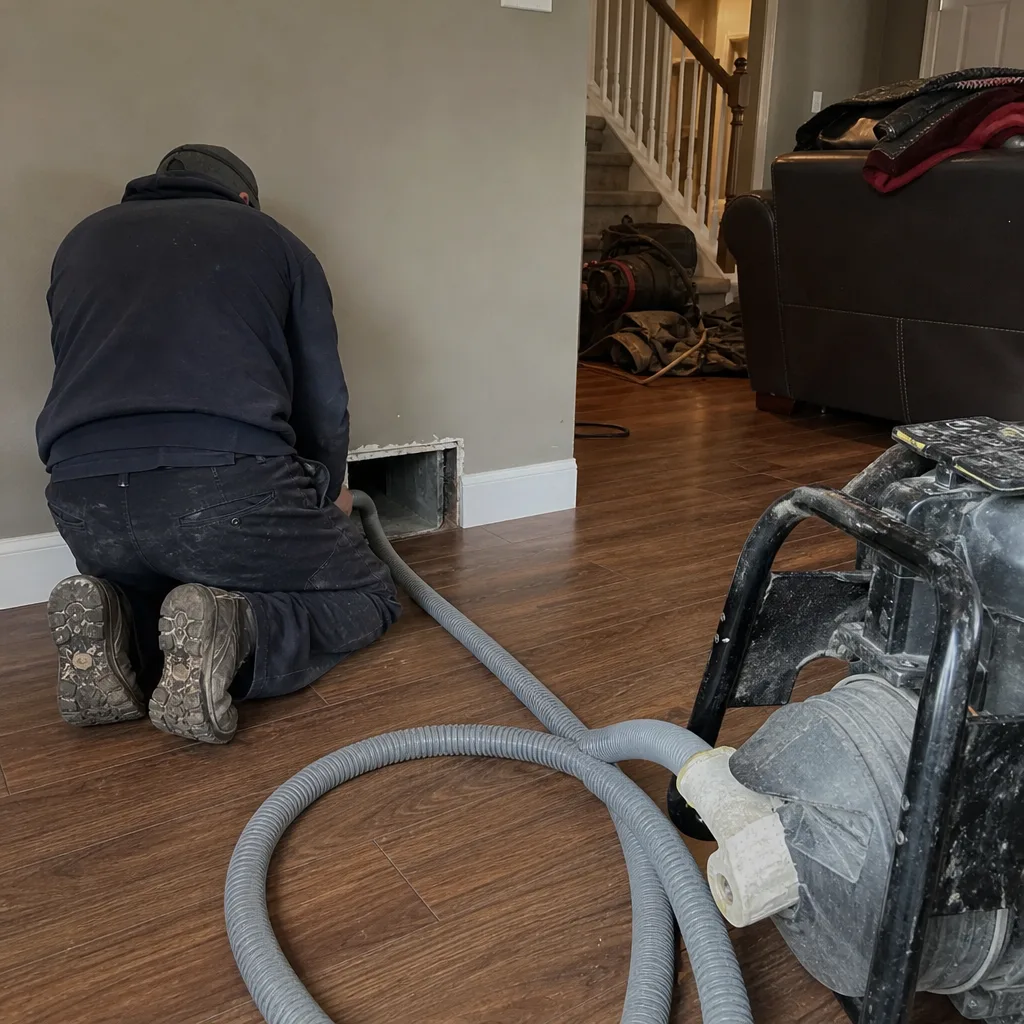 Before
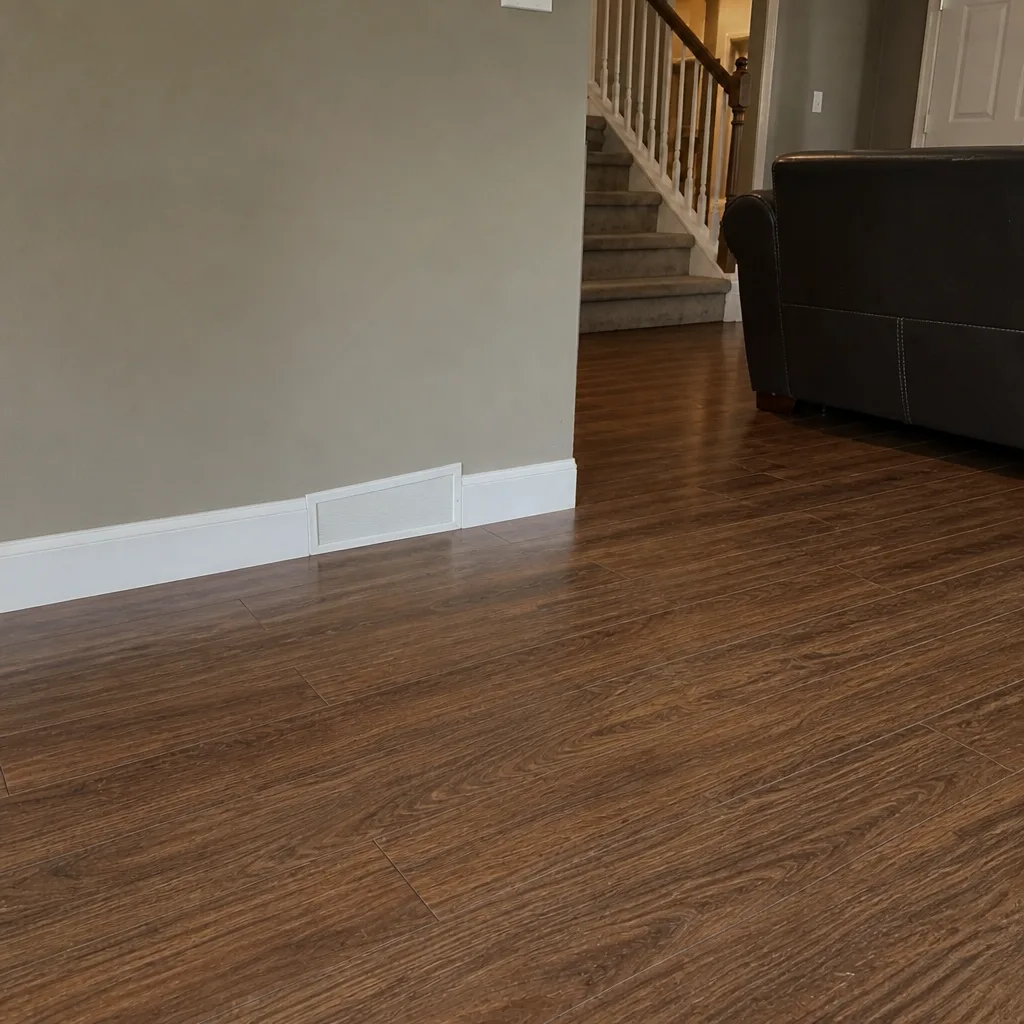 After
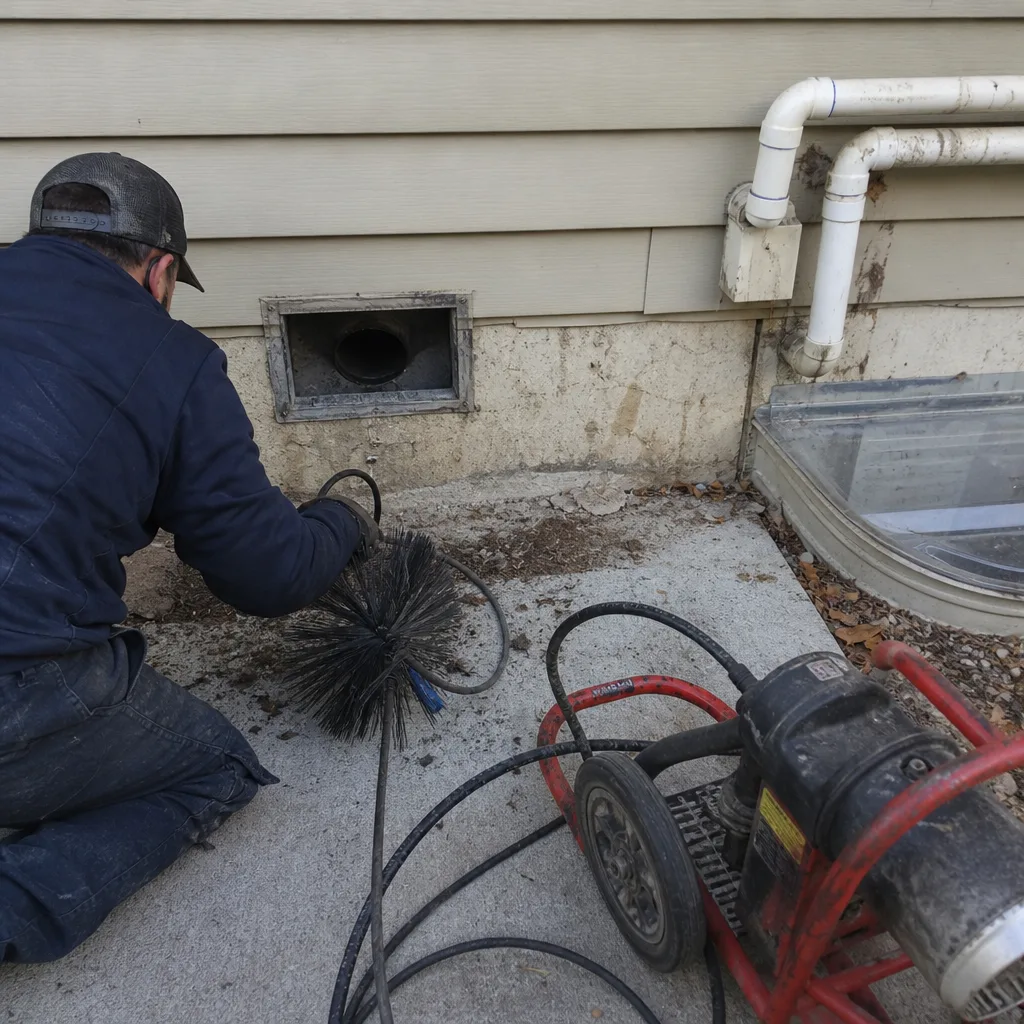 Before
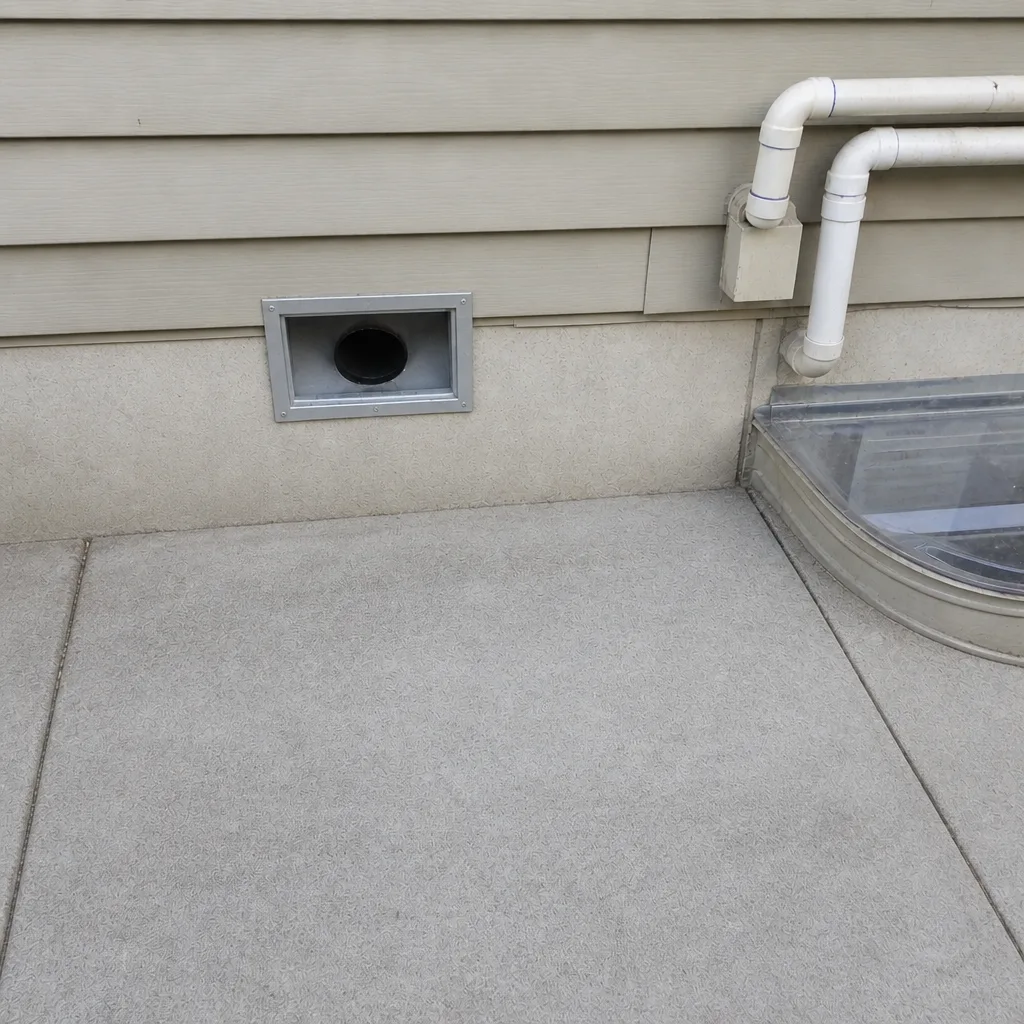 After
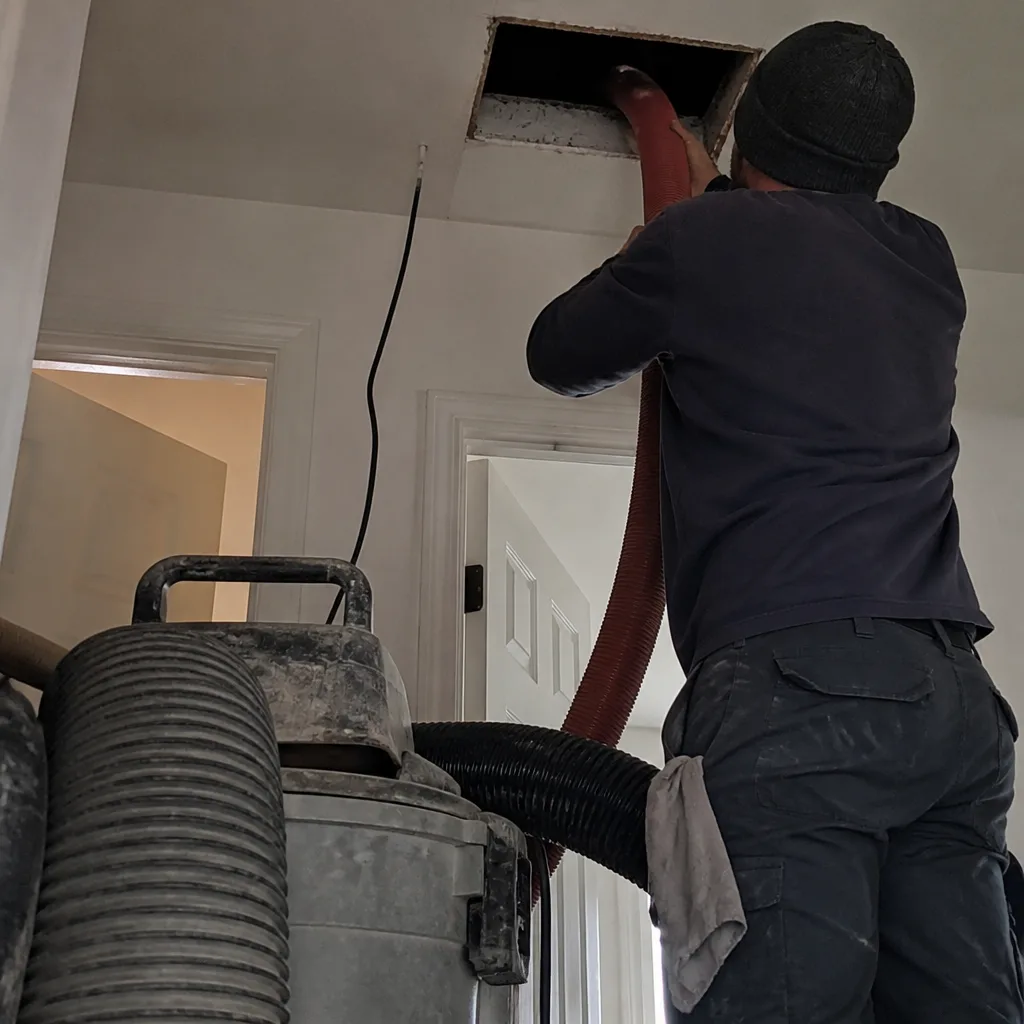 Before
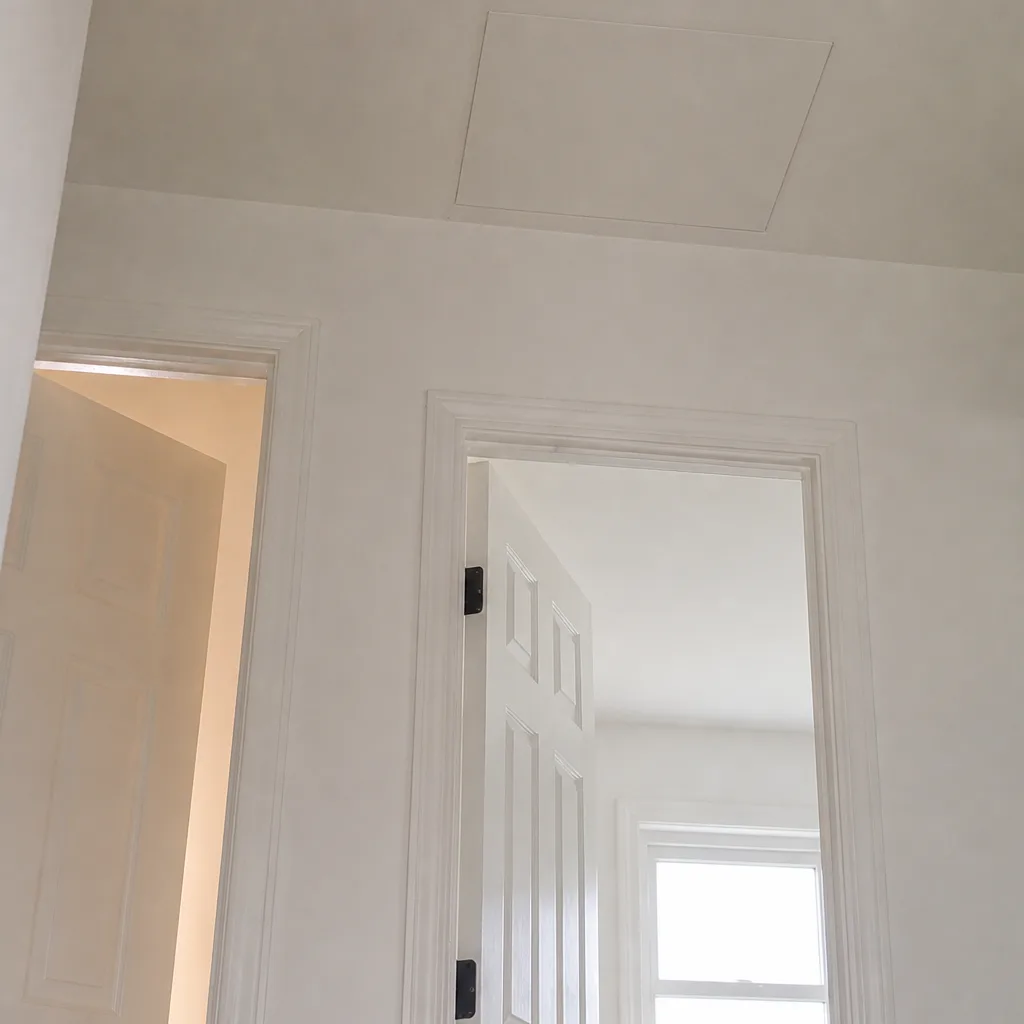 After
When to Call a Professional
Call a professional when the decision has already been made for you by the house’s condition. That means post-renovation dust, a moldy smell on startup, visible debris blowing from registers, ducts older than about 15 years, and any household where a respiratory or immune issue makes air quality a real safety concern. It also means a dryer vent that’s clearly loaded with lint, or any suspicious flex duct damage, which needs repair rather than cleaning. Nothing on that list is something consumer equipment can solve. Herriman Air Duct Cleaning offers free estimates in Herriman: call (844) 625-7619. We answer 24/7. Fast dispatch from 7am to 7pm, Sunday through Friday. The estimate is written per job, the price is agreed before work starts, and the technician will show you before-and-after photos of the actual ducts.
Frequently Asked Questions
Yes, for the surface work: register removal and washing, filter changes on schedule, dryer vent lint removal and routine visual inspection. What DIY can’t do is clean the duct interiors under pressure while contacting the duct wall, because that combination requires equipment far beyond consumer grade. For the actual cleaning of the ducts, a professional is the right call.
You can, and it will make the problem worse more often than not. A rented shop-vac generates a fraction of the pressure and volume a truck-mounted professional system produces, so it loosens dust without being able to extract it fully. The result is redistributed debris through registers and, in flex or duct board, a real risk of liner damage. If you want the ducts actually cleaned, the honest answer is professional equipment.
Every 3 to 5 years for most homes, and more often if the home has pets, has been renovated recently, or sits near active construction. Homes with a household member who has respiratory concerns or allergies may benefit from cleaning on a tighter schedule. The right cadence depends on the duct system age and use, which is why a walk-through estimate is more useful than a one-size rule.
A professional visit covers negative-pressure extraction, rotary agitation of each branch and the trunk, air handler and coil cleaning, sanitizing where microbial growth is present, and duct repair and sealing where the technician finds a failing seam or torn flex. Filtration upgrades with Honeywell or Aprilaire components can follow the cleaning. Our team stocks those products, so the air quality improvement continues past the cleaning appointment.
A torn flex run is typically more costly to repair than the cleaning would have been, because it requires attic access, hanger work and sealing at the plenum, and it can mean replacing the segment. A distributed dust mess is also more expensive to clean up than the professional cleaning would have cost. The math favors doing it once with the right equipment.
Winter inversion season in the Salt Lake Valley means the air coming into the system carries more particulate than in an open geography, and the wide seasonal temperature swing drives the expansion and contraction that loosens duct seams. Those two factors together mean Herriman homes accumulate dust faster and show seam failures sooner. That’s not a reason to panic, but it does tilt the decision toward professional cleaning for older homes.
The Bottom Line
DIY duct cleaning isn’t dangerous because homeowners don’t know how to clean. It’s ineffective because a residential shop-vac can’t produce the negative pressure a real duct system needs, and consumer equipment can’t agitate duct walls without risking damage to flex or duct board. The physics tells the story. Do the surface work yourself: registers, filters, dryer vent lint and visual checks. Save the actual cleaning, repair and filtration work for professional-grade equipment like Rotobrush and Nikro rotary tools, with post-cleaning filtration from Honeywell and Aprilaire standing behind the result. That’s how you get a cleaner home rather than a redistribution of the same dust.
If you’re in Herriman and you’ve been trying to decide, call (844) 625-7619 for a free estimate. The estimate is written per job, the price is agreed before any work begins, and the technician will walk you through what a professional cleaning involves so the comparison is a fair one.
Written by the team at Herriman Air Duct Cleaning.