
Last updated November 23, 2026
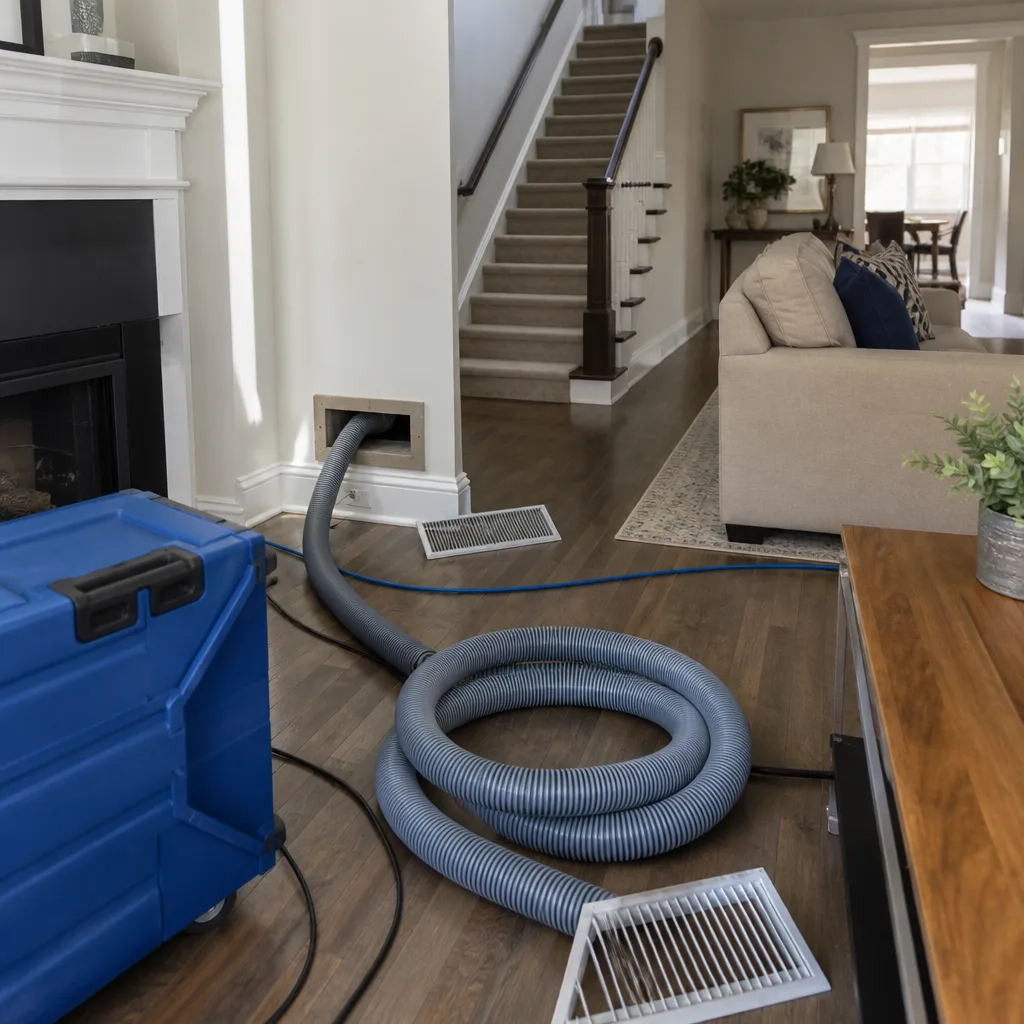 Whole-home duct cleaning
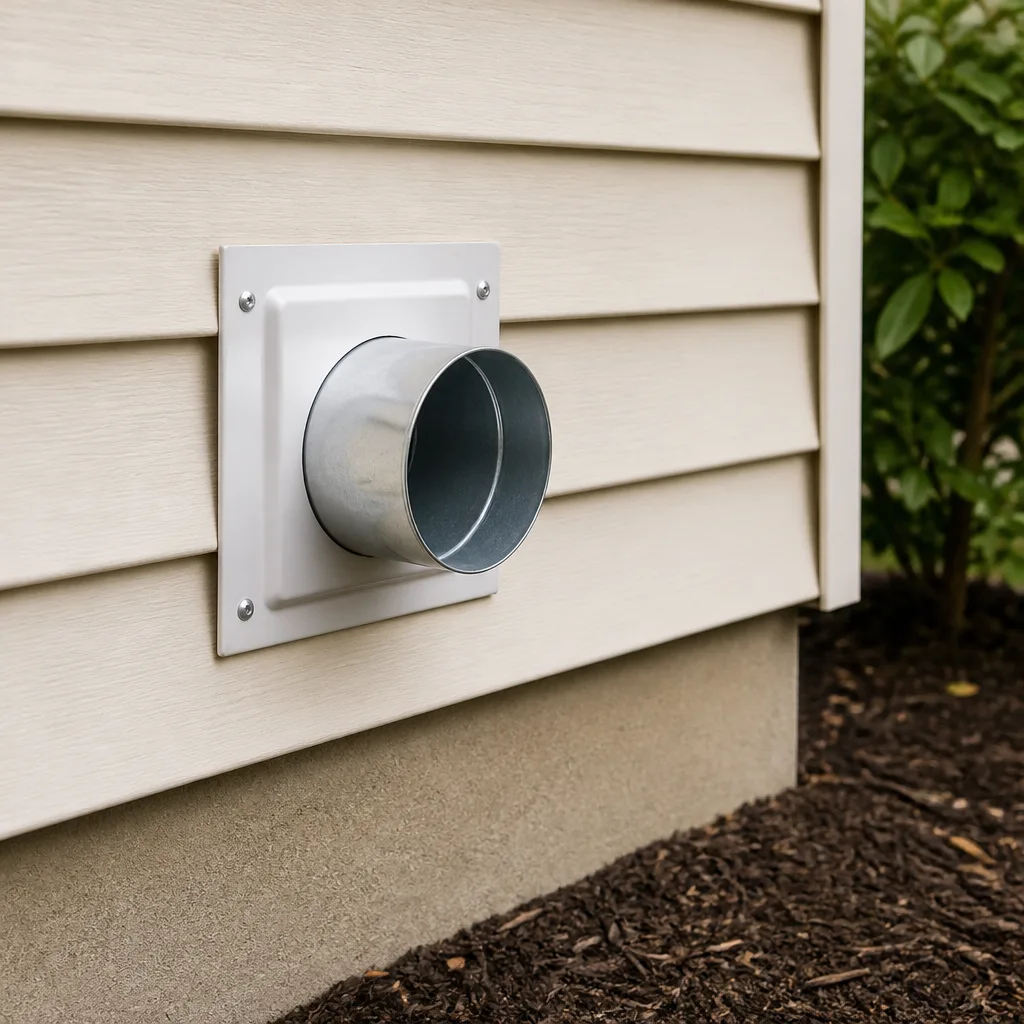 Dryer vent cleaning
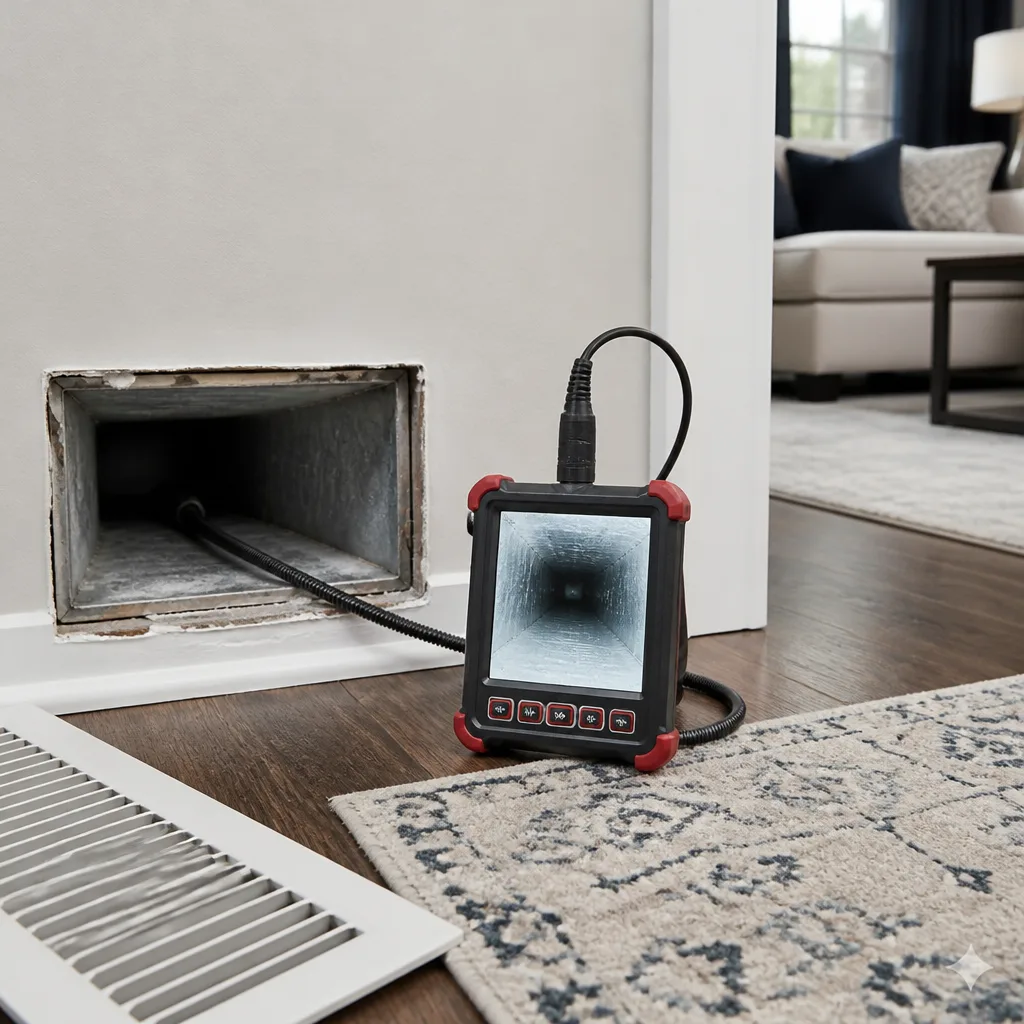 Camera inspection
 Sanitizing & deodorizing
Whole-system duct and dryer vent check with before-and-after photos - you see exactly what came out of your vents
That "$99 whole-house special" is a bait ad - the real number appears once they are in your hallway, or the "clean" is a shop-vac at the register. We photograph the inside of your ducts before and after instead.
Seasonal Air Duct Cleaning Care for Herriman: Year-Round Homeowner’s Guide
Most homeowners treat duct cleaning as a once-every-few-years chore, something to check off and forget. In Herriman, that schedule misses the point. The air moving through your ducts changes character four times a year here. Spring drags in construction dust from the valley’s ongoing building. Summer pulls wildfire smoke across the Wasatch Front. Fall sends a pulse of debris through the system the first time the furnace kicks on. Winter traps cold air against the mountains and holds fine particulate near the ground. Each season loads your ductwork differently, and a single annual cleaning leaves three of those four events unaddressed. This guide walks through what actually happens to a Herriman home’s air system month by month, and what to do about it.
Quick Answer
In Herriman, air duct cleaning works best as a seasonally timed service rather than a fixed multi-year interval. The highest-value cleaning window is late winter into early spring, right before cooling season, so you start summer with clean ducts. A second pass matters after heavy wildfire smoke seasons, and the first furnace start in fall is the moment to catch debris before it recirculates. Homeowners with allergies, pets, or new construction should plan on more frequent attention than the standard advice suggests.
Styles & brands we work with
- Whole-home duct cleaning
- Dryer vent cleaning
- Camera inspection
- Sanitizing & deodorizing
Table of Contents
- Why Herriman’s Climate Makes Duct Care Seasonal
- Spring: Clearing the Post-Inversion Debris Load
- Summer: Protecting Ducts During Wildfire Smoke Events
- Fall: The Cooling-to-Heating Debris Transfer
- Winter: Inversions and Indoor Particulate
- A Herriman Season-Indexed Service Calendar
- What a Proper Seasonal Inspection Includes
- Common Mistakes to Avoid
- When to Call a Professional
- Frequently Asked Questions
Why Herriman’s Climate Makes Duct Care Seasonal
Ductwork is a capture system. Whatever is in the air outside eventually finds its way into your return grilles, and whatever settles in the ducts sits there until something stirs it up. In a mild coastal climate, that cycle is slow and gradual. In Herriman, the cycle runs four distinct phases because the air itself changes dramatically from season to season.
You can see this in the Wasatch Front’s geography. Herriman sits in a valley bowl against the Oquirrh foothills, which means air masses don’t always flush out the way they would on open prairie. During the 2023 wildfire season, fine particulate matter, PM2.5, exceeded EPA hazardous thresholds in the area on 11 separate days. Each of those days was a loading event for any duct system running in recirculation mode, pulling smoke-laden air through the return and cycling it back into living spaces.
Add construction dust from rapid residential growth, the natural debris that accumulates in return plenums over a cooling season, and winter inversions that concentrate particulate at ground level, and you have a case for treating duct care as a schedule rather than a one-off. If you want the foundation, start with our overview of Herriman Air Duct Cleaning and what a full-scope service covers. Then read the season sections below to time it correctly.
The other factor specific to Herriman is housing stock. Many homes here were built in the last two decades and still carry construction-era dust in the ductwork: drywall fines, sawdust, insulation fibers, and the residue of new buildouts. That dust doesn’t vanish in the first year. It settles into horizontal runs, collects on turning vanes, and gets lifted every time the system cycles, especially during the low-humidity spring months when static charges make light particles cling to duct walls.
Spring: Clearing the Post-Inversion Debris Load
Spring is the single most important cleaning window in Herriman, and the reason is counterintuitive. By the time the snow melts, your ducts have just absorbed a full winter of recirculated indoor air, fed by weeks of particulate trapped in the valley by inversions. That material now sits in the system ready to be stirred up the first time you run air conditioning. Cleaning before cooling season means you start summer with a duct system that hasn’t been loaded, rather than one that’s already carrying a season’s worth of fine dust.
A proper pre-cooling-season inspection should check specific things rather than give your grilles a once-over:
- Return plenum and the main trunk line, where heavy debris settles first
- Horizontal branch runs, especially in attics and crawlspaces where dust collects more readily
- Turning vanes and elbows, which trap fine material the straight runs pass along
- The air handler cabinet and evaporator coil face for visible dust loading
- Filter housing for gaps that let unfiltered air bypass the filter
- Access doors and pans for signs of moisture accumulation from indoor humidity swings
Spring in Herriman also brings the building season into full swing. New housing tracts and remodels kick off dust that drifts into existing neighborhoods, and any home within a block of active construction takes on extra loading in its return air. If drywall dust is in the air, it’s in your ducts. A spring cleaning right after the spring building push clears both the winter accumulation and the fresh construction fall-out.
This is where professional equipment matters. A shop vacuum can reach the grilles, but it can’t pull material off the walls of a long horizontal run or clear the settled dust in a return plenum. Rotobrush and Nikro systems are designed to agitate and extract at the scale residential ductwork actually operates, which is why a spring cleaning done with the right tools leaves ducts visibly different from the inside out. If your system hasn’t been touched and it’s been a few cooling seasons, read up on air duct cleaning to understand what the full process involves before you book.
Summer: Protecting Ducts During Wildfire Smoke Events
Summer smoke events are now an expected feature of the Wasatch Front, not an anomaly. And each smoke day is a moment when your duct system either helps or hurts. A well-sealed, freshly cleaned system with a properly rated filter reduces how much of that smoke ends up circulating indoors. A system with leaky return ducts and a filter that’s overdue pulls smoke into the ducts and pushes it through every room.
Two moves matter most in a smoke event:
- Upgrade to a filter rated for fine particulate. Standard fiberglass filters are there to protect the equipment, not your lungs. A MERV-rated filter sized for your air handler catches a much higher percentage of the fine particles that make smoke events unhealthy. Honeywell and Aprilaire filtration products are built for household HVAC systems, and we stock and install them because filter upgrades are the single fastest improvement to indoor air quality during a smoke event.
- Shift the system to recirculation and close fresh-air intakes where possible. Smart thermostats and many modern controls let you set the system to recirculate rather than draw in outside air. During a heavy smoke day, that’s the difference between bringing outdoor particulate inside and filtering what’s already there.
Homeowners often forget the ductwork behind the filter. A filter catches particulate at the filter face. But if the ducts themselves are loaded with dust from previous seasons, that dust lifts and re-entrains in the airstream every time the system runs. In practice, a smoke event on top of a dirty system makes indoor air worse than the outdoor air, which is the opposite of what most people assume is happening.
If a heavy smoke season has passed through and your ducts haven’t been cleaned since before it, plan a cleaning in the following weeks rather than waiting for the next scheduled interval. The particulate that settled into the system during the smoke event won’t leave on its own. A sanitizing treatment after a heavy smoke exposure is also worth considering, since fine ash and volatile compounds can leave residual odor in fibrous material. Abatement Technologies protocols are designed for exactly this kind of post-event air quality work.
Fall: The Cooling-to-Heating Debris Transfer
Every fall your HVAC system changes the direction of its work. Cooling season runs air through the same ducts that heating season does, but the airflow characteristics shift, and so does what gets lifted into the airstream. The first furnace start in Herriman is a debris event: dust that settled over the spring and summer finally gets pushed up through supply grilles, which is why the “burning smell” that hits at first heat often has less to do with the furnace and more to do with accumulated dust baking off the heat exchanger and in the supply plenum.
The remedy is simple and often overlooked. Run the first heat cycle of the season with a fresh filter in place, and if the ducts haven’t been cleaned in a while, schedule that cleaning before the first heating demand rather than after. Debris that’s removed before it hits the heat exchange surface never gets baked into the system. Debris that’s already there under a full season of heat gets harder to remove.
Fall is also the right time to inspect structural duct issues before the heating season stresses them:
- Check for tape coming loose at joints and elbows, which opens leaks the system will pull through all winter
- Look at flexible duct in attics and crawlspaces for crushed sections or sagging runs that reduce airflow
- Inspect return registers for gaps between the boot and the drywall, a common source of unfiltered air draw
- Check the air handler and furnace cabinet seams for visible gaps or detached gaskets
Duct repair and sealing is a core service for us rather than a handoff, so a fall walkthrough catches the structural problems before they turn into winter heat loss or a furnace that works harder than it needs to. If you notice any of the issues above, book a HVAC cleaning visit so the equipment and the ductwork are evaluated together. Fall cleaning, filter replacement, and sealing in one pass means the system starts heating season tight and clean.
Winter: Inversions and Indoor Particulate
Winter inversions in the Salt Lake Valley are the reason Herriman’s air quality ranks among the most demanding in the state for the months of December through February. A cold air mass settles against the mountains, warmer air above traps it in place, and particulate from traffic, wood burning, and industry accumulates at ground level for days or weeks at a time. The outdoor PM2.5 number you see on the news is exactly what your HVAC system is pulling in if it’s drawing fresh air during an inversion.
Duct condition contributes to indoor PM2.5 in two ways. First, leaks in the return side pull air from unconditioned spaces: attics, crawlspaces, wall cavities, and garages. During an inversion, that air is just as loaded as the outdoor air, and it enters the system downstream of where the filter normally catches particulate. Second, a dirty duct system re-entrains deposited particulate into the airstream every time the blower runs, so indoor PM2.5 climbs even when windows stay closed.
A well-maintained duct system mitigates both. Sealed return ducts cut off unconditioned air intrusion. A clean duct interior stops the re-entrainment cycle. A properly spec’d filter handles what remains. And a fresh filter at the start of the heating season makes the biggest single difference, because the system runs more hours per day in winter than any other time of year, and every hour of blower operation is an hour the filter is doing the work.
In our experience, homes in Herriman with newborn children, elderly family members, or anyone with asthma or allergy sensitivity benefit most from a winter cleaning and a filter check before the inversion season sets in. If you’re not sure whether the ducts are contributing, a visual inspection during a cleaning will tell you. If the interior of a return plenum shows more than a light dust film, the system is loading and needs attention. Air quality sanitizing after a winter cleaning also helps reduce the settled mold and microbial load that a damp, closed-house season can encourage.
A Herriman Season-Indexed Service Calendar
Instead of “every three to five years,” Herriman homeowners should think in seasonal checkpoints. Here’s a schedule tailored to the Wasatch Front climate rather than generic national guidance:
- Late February to mid-March: Full air duct cleaning and HVAC cleaning before cooling season. This is the primary annual window and captures the post-inversion debris load.
- March to April: Filter replacement, duct inspection, and repair of any joints or seals that opened over the winter. Check for construction dust intrusion if there’s active building nearby.
- May to June: Dryer vent cleaning before summer, since dryer vent lint accumulation is a fire hazard regardless of season and the heating cycle runs year-round on the vent line.
- June through September: Monitor smoke forecasts. Upgrade to a MERV-rated filter before the first significant smoke event, and switch to recirculation when air quality is poor.
- September to October: Filter change before the first heat cycle, and a visual duct inspection for leaked joints and settled debris. A cleaning here is a second major window if the spring cleaning is skipped or the summer was heavy on smoke.
- November to February: Filter check every month during inversion season. Air quality sanitizing if the home has been closed up tight and shows signs of dust or mustiness.
That’s two cleaning windows a year in a typical household (spring and fall), with filter changes four times, and repair work done during the shoulder months when the system is under the least demand. Homes with pets, allergy sufferers, or recent construction can justify a third window. Homes with no pets and no allergy concerns might do fine with one full cleaning per year if it’s timed correctly in late winter.
What a Proper Seasonal Inspection Includes
Inspection is the part homeowners most often skip and the part that makes the difference between a durable cleaning and a one-off surface pass. A professional inspection of a Herriman home’s system should cover the full air path, from the return grille to the supply registers, and include:
- Return side: plenum, trunk, branch runs, filter housing, and any accessible return duct for visible contamination, leakage, or disconnected joints
- Air handler: blower wheel, cabinet interior, evaporator coil face, and any standing moisture in the drain pan
- Supply side: trunk, branches, and register boots for dust loading and any sign of pest activity
- Structural integrity: joint seals, flexible duct support, and any crushed or sagged runs that restrict airflow
- Dryer vent: full run from the appliance connection to the exterior termination, particularly at elbows and the exterior hood
Equipment matters at inspection time, too. A camera or handheld light inside a long horizontal run tells you more than any surface guess. During a cleaning, Rotobrush and Nikro systems use mechanical agitation and high-volume negative pressure to lift and extract material rather than just disturb it, which is why a professional cleaning visibly changes duct interior surfaces. If the inspection turns up a leak or a crush, the same visit can move into duct repair and sealing rather than requiring a second contractor to come back and open the system again.
For homeowners planning a full seasonal refresh, understanding dryer vent cleaning alongside the duct work is worth the time – both are part of the same air and exhaust system and both benefit from a scheduled approach.
See the difference
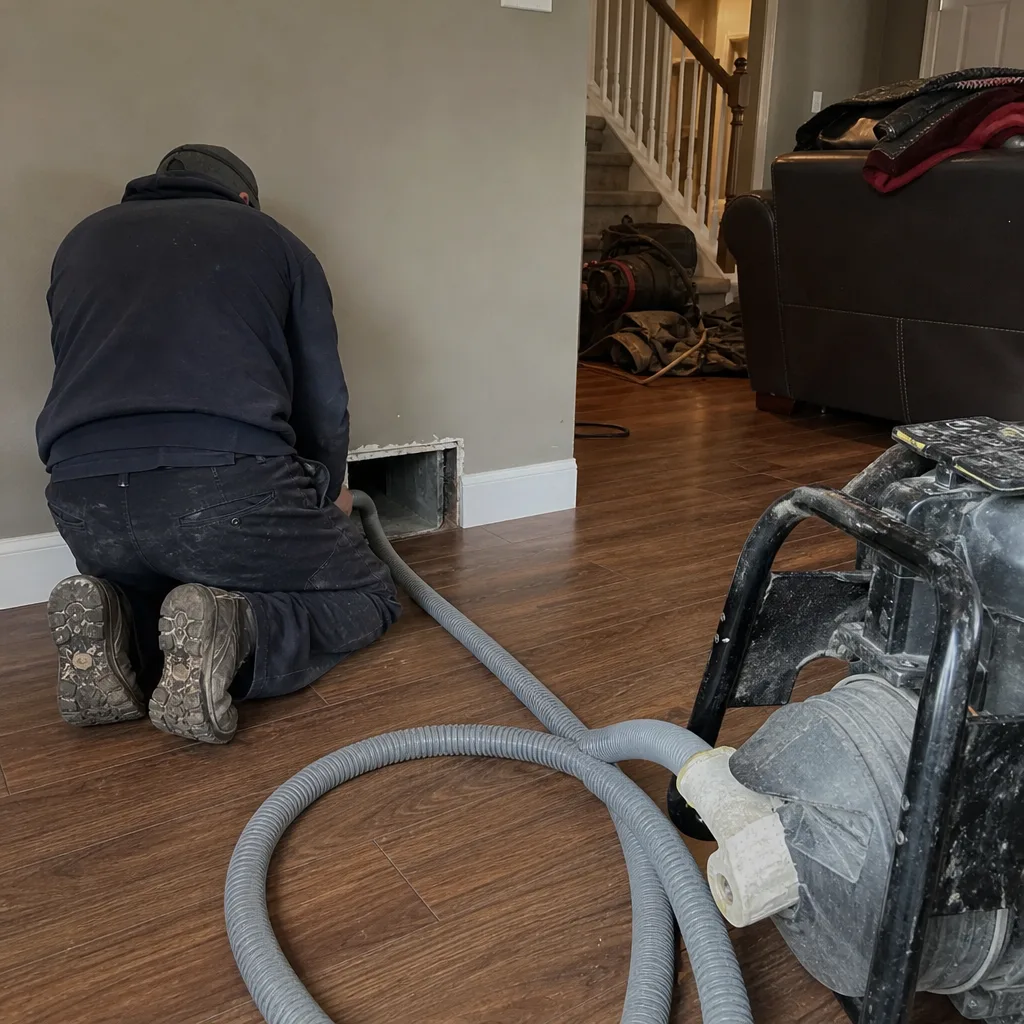 Before
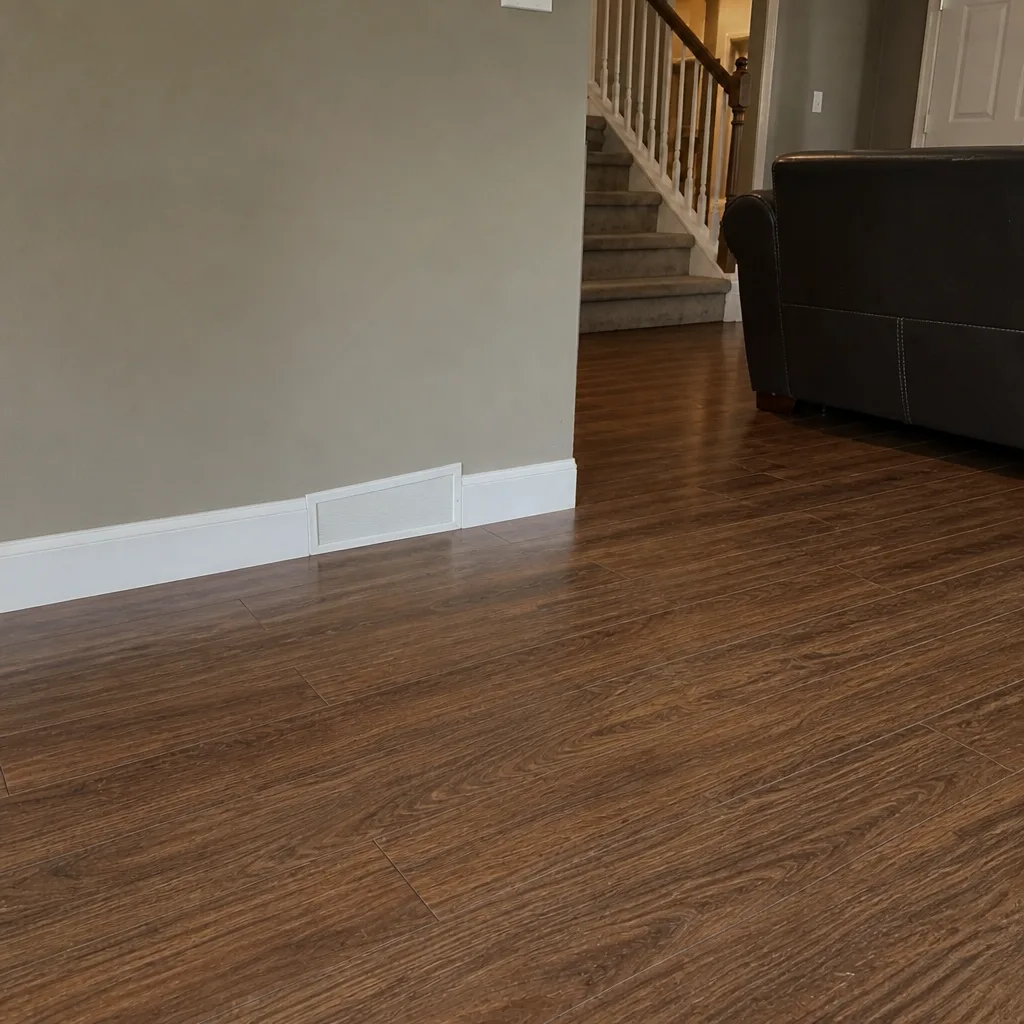 After
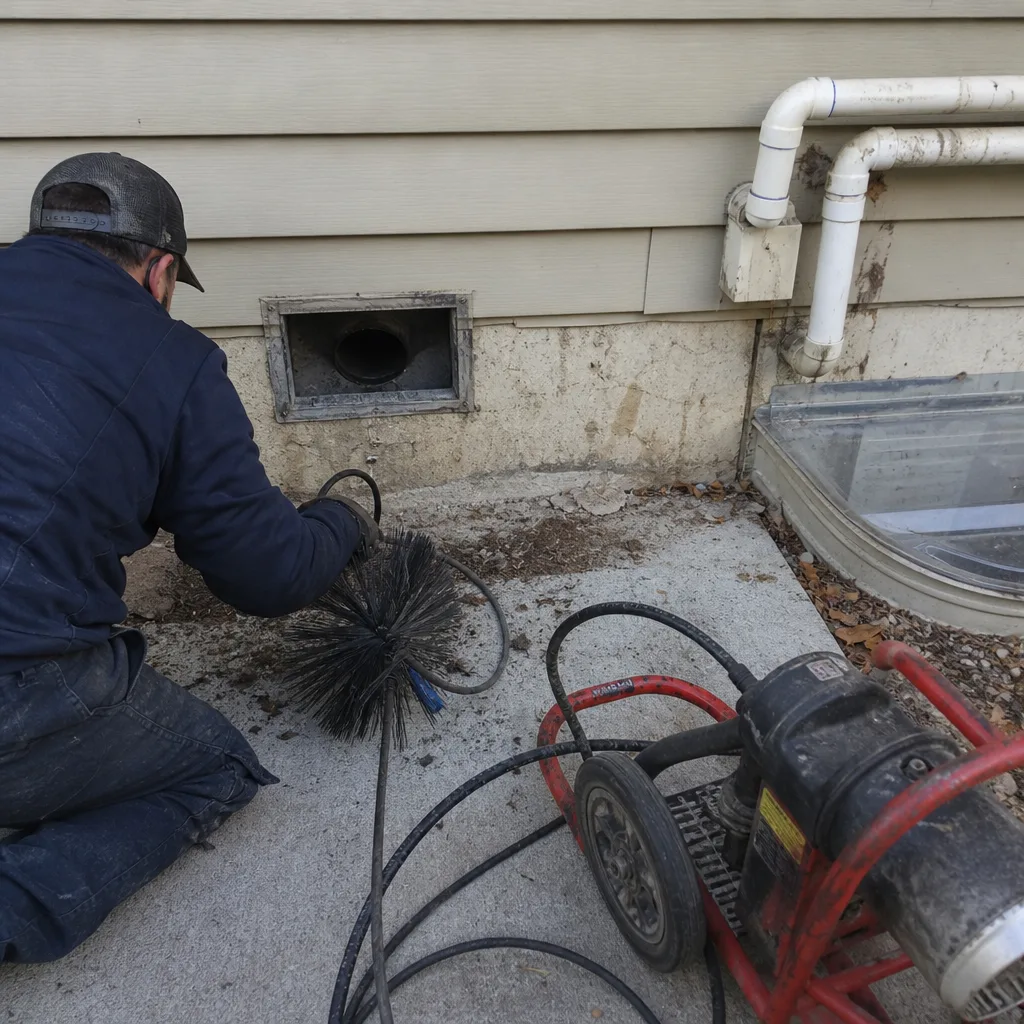 Before
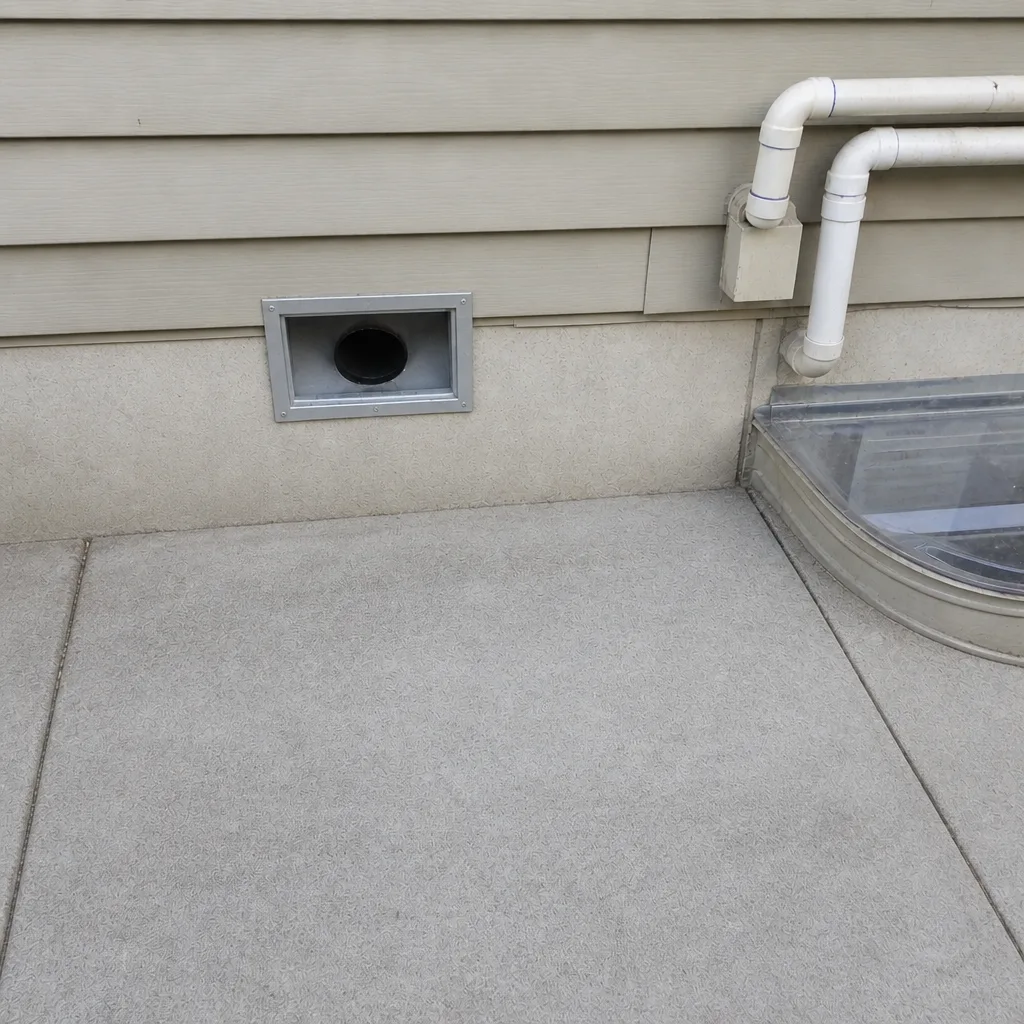 After
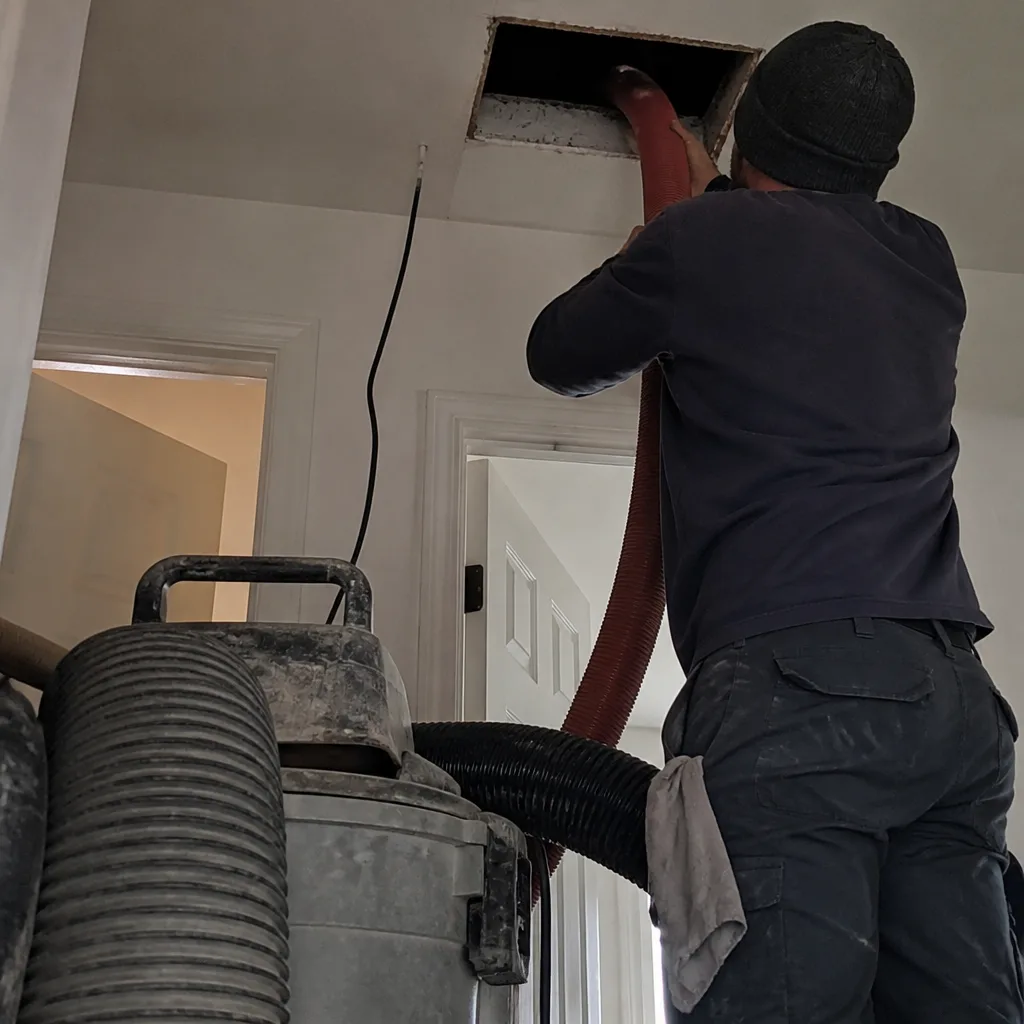 Before
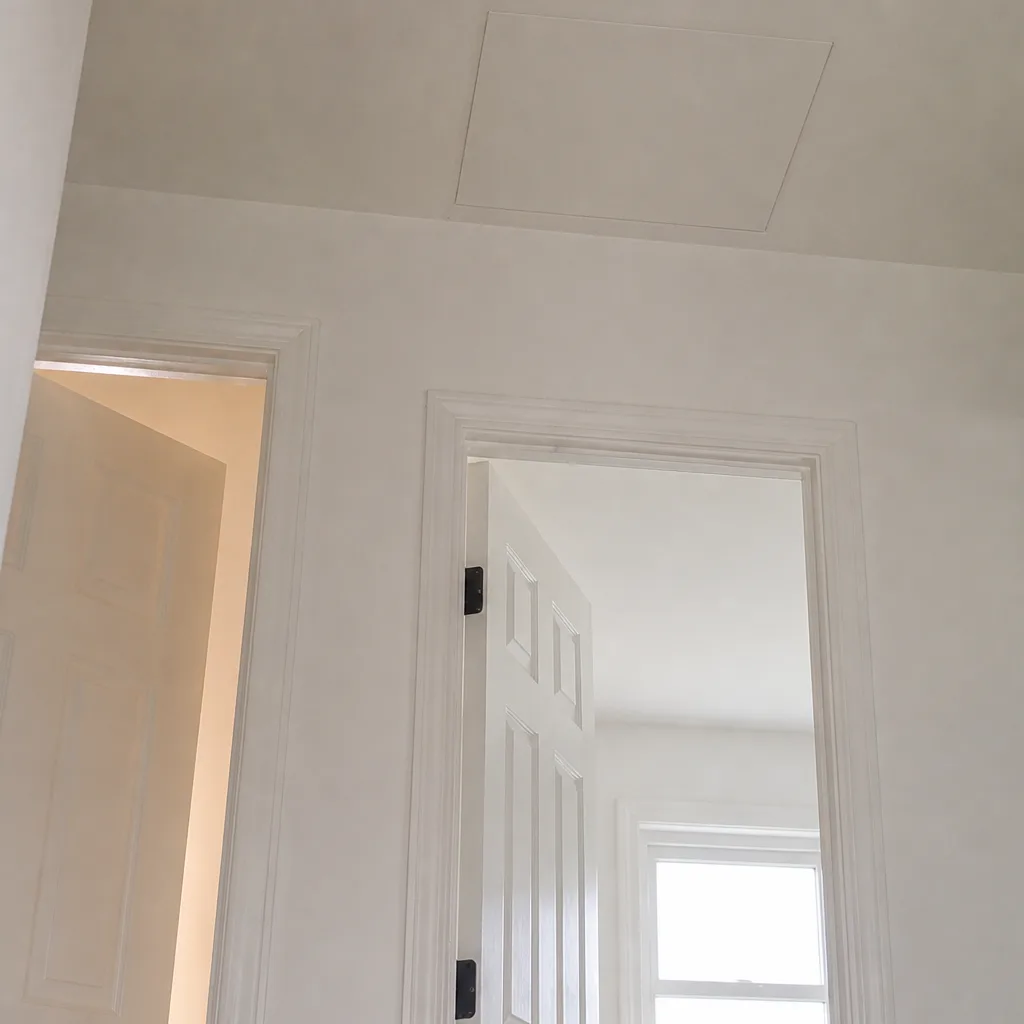 After
Common Mistakes to Avoid
- Treating duct cleaning as a five-year item. Herriman’s seasonal cycle doesn’t match a generic multi-year interval. Wind-loaded summers and inversion-heavy winters load the system faster than a mild-climate schedule accounts for, so the “every three to five years” advice undershoots for many households here.
- Skipping the filter change at first heat. A filter that’s been in place since spring is already loaded, and the first heating cycle pulls a season’s worth of debris into the plenum. Change the filter before you turn on the heat, not after you smell it.
- Assuming a new filter solves a dirty system. The filter catches particulate at the filter face, not inside the ducts. A loaded duct system keeps re-entraining dust regardless of how good the filter is, and the airstream that passes the filter is the one you breathe.
- Ignoring return-side leaks. Unfiltered air from attics, garages, and crawlspaces enters the system downstream of the filter, so a return leak is a filter bypass. Look at boots, seams, and cabinet gaskets before assuming the filter is doing its job.
- Waiting for the burning smell to clean the ducts. The dust that bakes off the heat exchanger at first heat is dust that could have been removed in fall. Once it’s baked into the heat exchange surface or settled in the supply plenum, it’s harder to get out.
- Using a shop vacuum as a duct cleaning tool. Shop vacuums reach the register face and little else. Horizontal runs, elbows, and turning vanes are where debris accumulates, and they need agitation and sustained negative pressure to clear.
- Skipping the dryer vent. Dryer vent lint is a fire risk and accumulates independent of the duct system. Spring is the right time to have it cleared, before the vent line runs a full year of lint cycles through the summer heat.
When to Call a Professional
Some seasonal maintenance is a homeowner task (filter changes, visual checks). Other issues need a trained eye and professional equipment. Call a professional if you’ve had a heavy wildfire smoke season and the ducts haven’t been cleaned since before it, if you’re seeing visible dust blow from supply registers when the system starts, if anyone in the household has developed new allergy or asthma symptoms since moving in, or if a visual inspection of your return plenum shows more than a light film of dust. Same goes for any sign of a return-side leak, a crushed flexible duct, or a dryer vent that’s been in service for more than a year without a cleaning. Our technicians have up to 10 years of experience with the full air system – ducts, HVAC, dryer vents, repair and sealing, sanitizing. Herriman Air Duct Cleaning offers free estimates in Herriman – call (844) 625-7619. We answer 24/7. Fast dispatch from 7am to 7pm, Sunday through Friday.
Frequently Asked Questions
Most Herriman homes do best with a full cleaning in late winter to early spring, with a second cleaning window in fall if the summer saw significant wildfire smoke. That’s two cleanings per year for households with pets, allergies, or recent construction, and one annual cleaning for households without those factors. The generic “every three to five years” advice undershoots for our climate because the seasonal loading here is more intense than in a mild-climate market. Call (844) 625-7619 for an exact quote based on your system.
Yes, if the ducts weren’t cleaned before the smoke event. Fine ash and particulate that gets pulled through the return during a smoke event settles into horizontal runs and turning vanes, and it doesn’t leave on its own. A cleaning after the smoke clears removes that deposited material, and a sanitizing treatment addresses the residual odor and fine particulate that fibrous surfaces hold. Call (844) 625-7619 to schedule an inspection.
Late winter to early spring is the primary window, right before you switch to air conditioning. That timing means you start cooling season with clean ducts rather than ducts that have carried a full winter’s worth of inversion-borne particulate. Fall is the second-best window, timed before the first heat cycle of the season. Call (844) 625-7619 and we’ll help you plan around the seasons.
Yes. During inversions, outdoor PM2.5 climbs because a cold air mass traps particulate at ground level, and any HVAC system drawing fresh air pulls that particulate into the home. Sealed return ducts and a properly rated filter are the two most effective mitigations, and clean ductwork prevents re-entrainment of deposited particulate every time the blower runs. An inspection will tell you whether your system is contributing. Call (844) 625-7619 for a free estimate.
No, not on its own. A higher-MERV filter catches more fine particulate at the filter face, but it can’t remove dust already loaded inside the ductwork. If the ducts are the source, you’ll see dust blowing from supply registers even with a new filter in place. A Honeywell or Aprilaire upgrade is part of the answer; it’s most effective after the ducts have been cleaned and any return-side leaks have been sealed. Call (844) 625-7619 to talk through the right combination.
Ask for before-and-after photos of your own ducts. A proper cleaning with Rotobrush and Nikro equipment visibly changes the interior surfaces, so photos taken inside the same runs before and after show the difference. If a company won’t document the work, that’s a reason to look elsewhere. Call (844) 625-7619 and we’ll show you exactly what we find and what we remove.
The Bottom Line
Herriman’s climate puts your duct system through four different stress events a year, and a single annual cleaning can’t keep up. Time your primary cleaning in late winter, before cooling season. Watch for wildfire smoke through the summer and plan a follow-up cleaning if a heavy season passed through. Change the filter before the first heat cycle in fall, and pay attention to return-side leaks and structural duct issues that the heating season will exploit. Filter checks every month through inversion season in winter, with cleaning attention focused on the systems that are actually loading. Better air starts with the right equipment and the right timing – and in Herriman, that’s a seasonal plan, not a fixed interval.
Call (844) 625-7619 for a free estimate. We answer 24/7. Fast dispatch from 7am to 7pm, Sunday through Friday.
Written by the team at Herriman Air Duct Cleaning.