
Last updated November 23, 2026
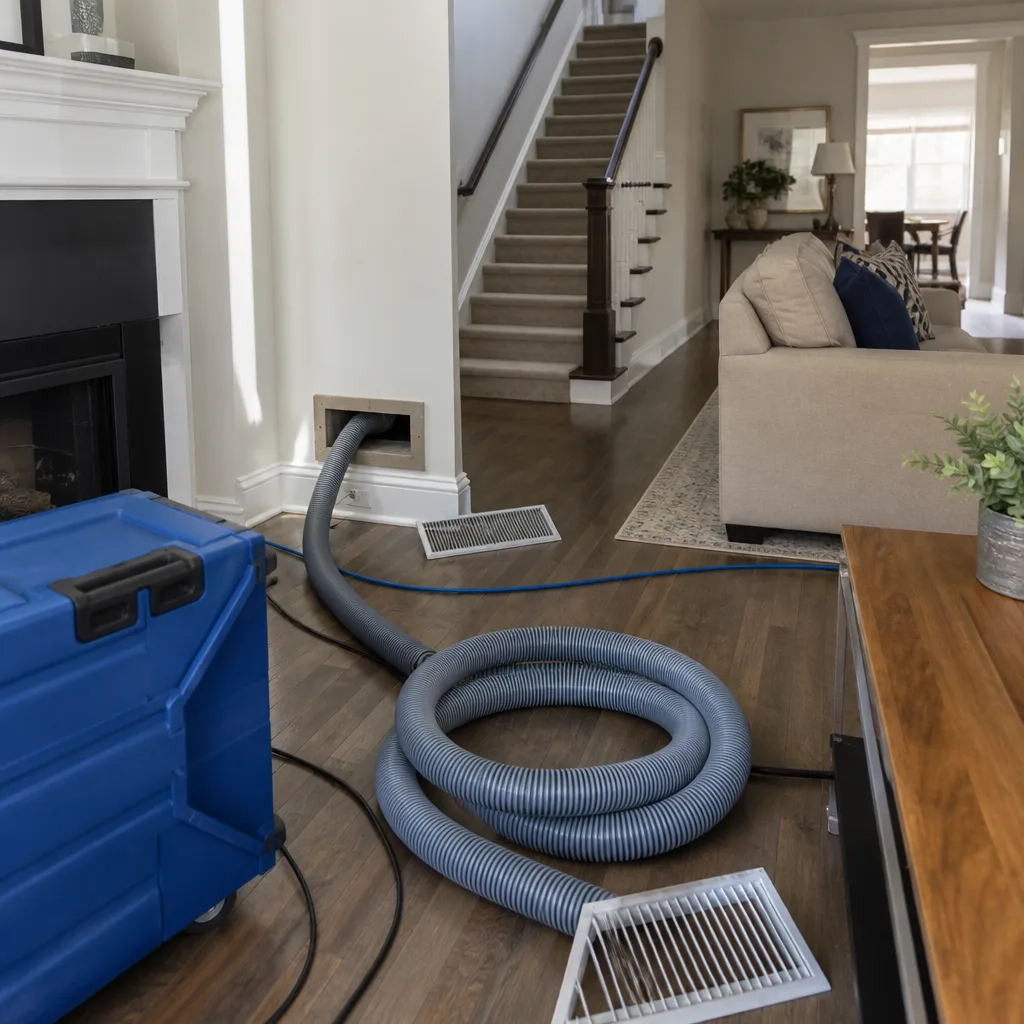 Whole-home duct cleaning
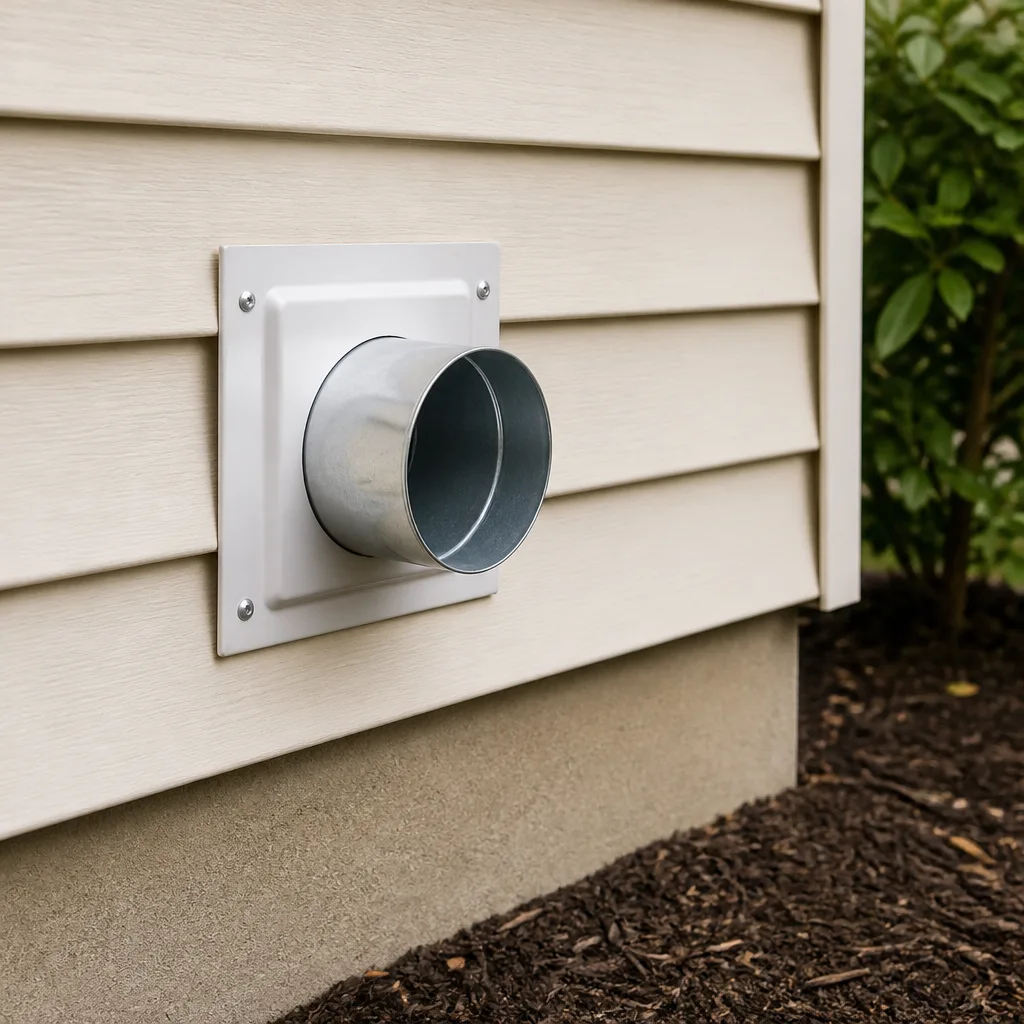 Dryer vent cleaning
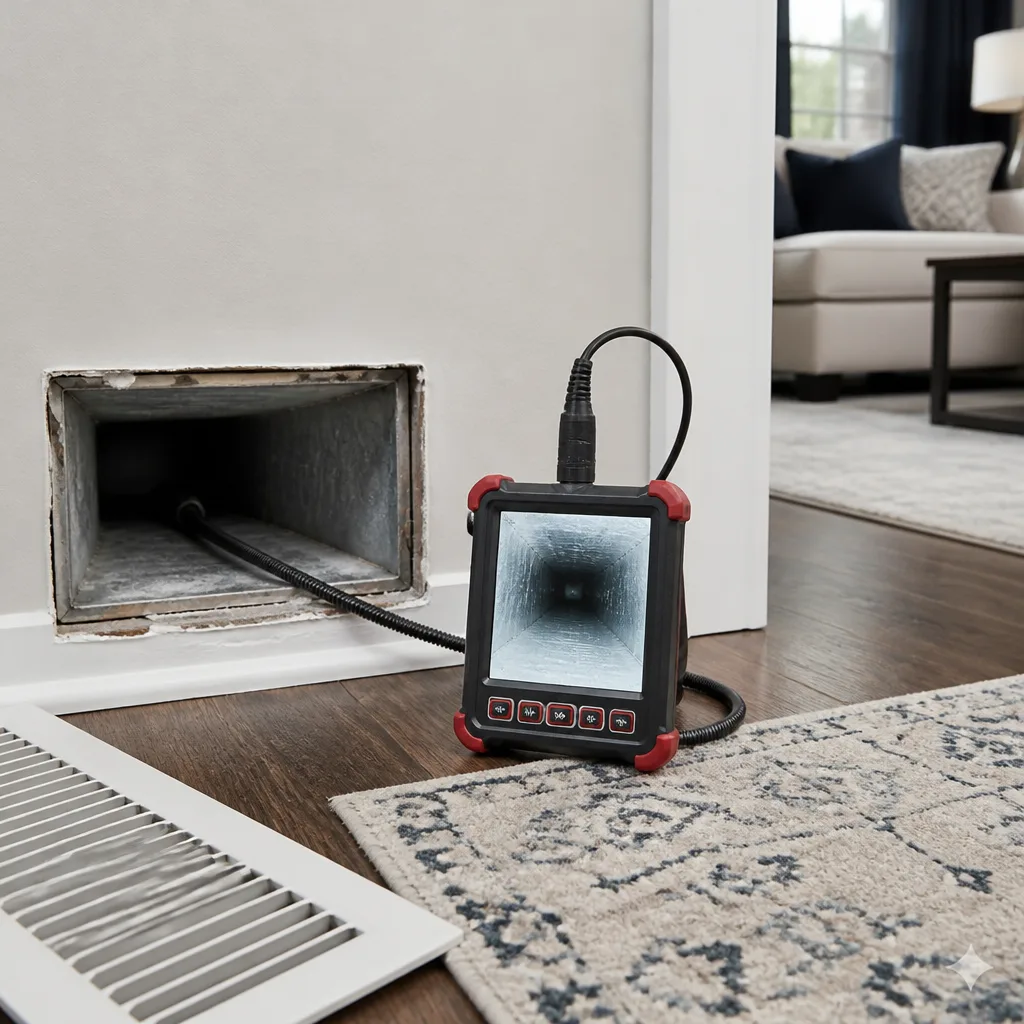 Camera inspection
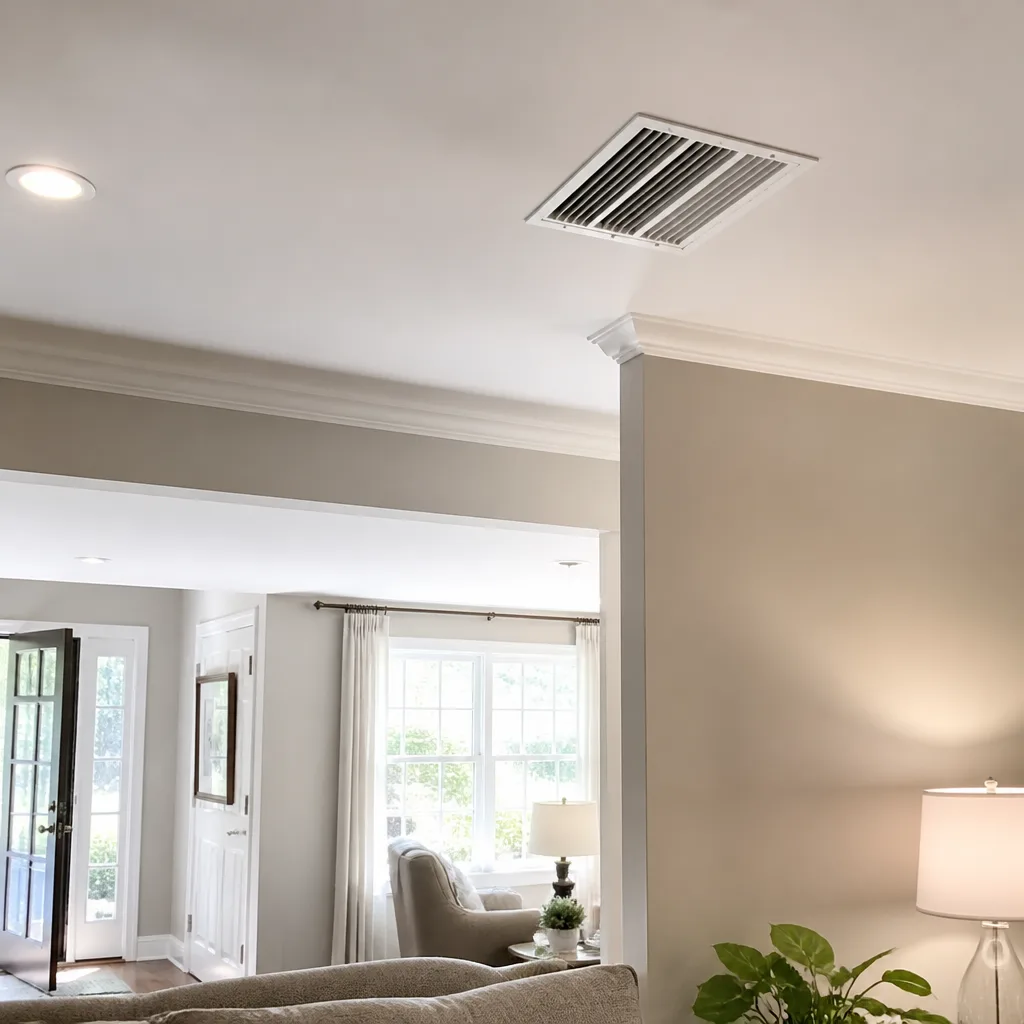 Sanitizing & deodorizing
Whole-system duct and dryer vent check with before-and-after photos - you see exactly what came out of your vents
That "$99 whole-house special" is a bait ad - the real number appears once they are in your hallway, or the "clean" is a shop-vac at the register. We photograph the inside of your ducts before and after instead.
Air Duct Cleaning Maintenance Checklist for Herriman Homeowners
Most duct advice online assumes a simple system: one trunk, a few short branches, easy access. That’s not the housing stock you live in. In Herriman, a home built after 2010 typically runs flex duct through multiple zones, and several of those branches are longer than 15 feet. Long flex runs behave differently from rigid metal. They sag at the low points, they pinch at the bends, and the material itself gives debris a surface to cling to. None of that shows up by shining a flashlight into a register. What follows is a checklist built around the way Herriman systems actually fail between professional cleanings, not a generic 90-day reminder copied onto yet another page.
Quick Answer
A working maintenance checklist for an Herriman home has four jobs: inspect every register quarterly for signs beyond dust, track your filter by MERV rating against the seasonal air quality you’re actually living in, watch the flex duct for sagging and disconnection, and log static pressure so you catch airflow loss before it becomes a coil or blower problem. Schedule air duct cleaning around system changes (tune-ups, remodels, roof work, landscaping) rather than on a fixed calendar date. Everything else in this guide is detail added to those four habits.
Styles & brands we work with
- Whole-home duct cleaning
- Dryer vent cleaning
- Camera inspection
- Sanitizing & deodorizing
Table of Contents
- The Quarterly Register Inspection Protocol
- Filter Tracking by MERV Rating, Not the Calendar
- Spotting Flex Duct Sagging and Disconnection From Inside
- Tracking Static Pressure With a Magnehelic Gauge
- Scheduling Duct Cleaning Around HVAC Tune-Ups, Roof Work, and Landscaping
- The New-Construction Phase: The First Two Years in Herriman
- The Seasonal Checklist: What Changes From Summer to Winter
- Shared Ducts, Dryer Vents, and HVAC: Knowing What You Can’t Check
The Quarterly Register Inspection Protocol
Every register in the house should get a two-minute look four times a year. The point isn’t to find dust. It’s to catch changes in the system before they cost you airflow or comfort. Dust on the grille tells you almost nothing; the same coating shows up on a clean system three months after cleaning if the house is generating it. What matters is everything else.
Here’s what to walk through in each room:
- Look at the grille pattern. A register you cleaned three months ago that’s evenly coated again suggests the room is generating its own dust (carpet, pets, bedding) or the return for that zone is pulling from a dirty source. Uneven coating, dark on one side and clean on the other, usually points to a supply branch that’s lost pressure.
- Feel the airflow with the back of your hand. Compare it to the same register on your last check. If it’s softer, that’s a change worth logging. If it’s stronger, note that too.
- Check the damper lever. Some registers have a manual damper behind the grille. If the lever has been moved (kids, movers, guests fiddling with it), you’ve just closed a branch you didn’t know you closed.
- Look at the wall or ceiling around the boot. Hairline cracks, discoloration, or a ring of dust around the opening can point to air leaking between the boot and the drywall. That’s a sealing issue, not a cleaning one, and it’s exactly what duct repair and sealing is for.
- Shine a light into the grille for two seconds. Not to inspect depth, you can’t see depth. You’re looking for anything that shouldn’t be there: a fallen piece of insulation, a dead insect, a bit of construction material. Anything visible at the surface is worth a note.
- Note the temperature difference. If one room is consistently a few degrees off, the register protocol is your first detector. A room that’s drifted is often a duct problem hiding before the airflow gets bad enough to notice.
Log it. A small notebook or a notes app with the date, room, and observation gets you a map of how your Herriman home’s system changes over a year. When it comes time to call a professional, you’re calling with information, not a vague complaint.
Filter Tracking by MERV Rating, Not the Calendar
The “change it every 90 days” rule isn’t wrong, it’s just too blunt. A 90-day filter in a home with two cats and a dusty Herriman backyard can load in six weeks. The same filter in a clean home with no pets can run eleven weeks without pressure loss. What you’re tracking is pressure, not time.
Start by knowing what MERV rating your system was designed for. Most residential systems in Herriman accept a 1-inch filter at MERV 8 to MERV 11 comfortably. A MERV 13 can work, but only if the filter’s rated pressure drop matches the blower’s capacity. An overly restrictive filter is a common reason a system that was handling rooms fine six months ago starts feeling weak. If the filter is the highest-efficiency option on the shelf and the airflow is softer, that’s the cause.
Match filter changes to the Herriman seasons, not the calendar quarter:
- Late winter into spring. Melt-out and the first dry, windy weeks are when fine particulate climbs. Check the filter monthly through this window and replace when the frame looks grey halfway up.
- Summer wildfire and inversion season. This is when filter load can double. If your home uses a higher-MERV option like a Honeywell or Aprilaire media filter, you’ll notice the pressure drop in static readings before you’d notice it in the filter media. Trust the reading.
- Late summer into fall. Construction dust around Herriman is heavy when new lots are grading, and it drifts inland even from sites a couple of streets away. Expect shorter filter life if you’re near active building.
- Winter. Furnace runtime increases, so overall filter loading comes at you from a different angle. Look at the filter, not the date, before deciding it’s fine.
The practical rule: check the filter monthly. Replace at whatever interval the visual and pressure checks demand, and note the date each time. A filter log with three dates on it is already more useful than any generic reminder app.
Spotting Flex Duct Sagging and Disconnection From Inside
Flex duct failures rarely announce themselves. They announce themselves in comfort: a room that’s cold, a room that’s warm, a room with weaker airflow than it used to have. Since most of a Herriman flex run lives in the attic or a soffit cavity, you can’t see the failure from inside the living space. But you can see its fingerprint at every register. Here’s what to look for:
- One register noticeably weaker than the others in the same zone. If two adjacent rooms feed from the same trunk and one is half the airflow of the other, sagging or partial disconnection is high on the list of causes.
- Temperature swings that don’t match the thermostat reading. A room that’s off by 4°F to 6°F while the rest of the house is stable is often a supply branch that’s lost a chunk of its volume.
- Visible dust lines at the register frame. When a flex branch separates from its boot or collar, positive pressure leaks air into the wall or soffit cavity. That shows up as a dark line around the register edge, not in the grille itself.
- Sound changes. A whoosh or whistle at a register can mean the branch has been partially pinched (sagging inside a bend) or a damper is closed inside the boot. Sound is one of the earliest signs of a flex problem.
- Cold spots in winter that appeared suddenly. A duct that ran fine for years can collapse at a bend after a sag finally closes the interior diameter. It’s not a gradual decline, it’s a threshold.
If any of those signs are showing, stop there. Flex duct work inside a wall, attic, or soffit is worth a trained eye, and if you open the system to check, you’ve committed to sealing it back up properly. This is exactly what duct repair and sealing exists for, and it’s one reason we offer repair and sealing as a core service: the fix should happen with the same crew doing the cleaning, not handed off to someone else.
Tracking Static Pressure With a Magnehelic Gauge
Most homeowner checklists skip this entirely, and it’s the single most useful habit you can add. Static pressure is the resistance your air handler is pushing against. When it climbs, your system works harder to move less air. When it drops suddenly without a filter change, something has opened up that shouldn’t have (a disconnected duct on the return side, typically). Most Herriman homes have no way to see this, so problems get noticed only when comfort falls off.
A magnehelic gauge gives you a readout. You can have one set up by a technician across the air handler filter slot, or ask about a permanent tap the next time someone’s up there. Once it’s in place, log the reading a few times a year:
- Record a baseline. Note the reading with a fresh filter installed and all registers open. This is your reference point.
- Check on the same day each season. Set a reminder for around the start of each season. Consistency is what makes the log useful.
- Log every filter change. A reading just before a change and a reading right after tells you how much the filter is contributing to the pressure.
- Watch for a shift of more than a small margin. When a reading moves and nothing on your end has changed (no new filter, no register moved), that’s the moment to schedule a professional check. Something in the ductwork or the equipment has changed.
This is the habit that turns duct maintenance from guesswork into measurement. In our experience on Herriman jobs, the homes that catch problems early are the ones whose owners are watching pressure, not the ones changing filters on a strict date.
Scheduling Duct Cleaning Around HVAC Tune-Ups, Roof Work, and Landscaping
The order you do things in matters more than most homeowners realize. Cleaning the ducts and then having the roof torn off the following week undoes part of the cleaning. Skipping a tune-up before cleaning means you’re cleaning a system that’s about to be opened again. In Herriman, where new construction, roof work, and dry-season landscaping all generate significant airborne debris, sequencing is worth planning.
Here’s the sequence that holds up:
- Tune-up first, cleaning second. Have the HVAC system checked and serviced before the ducts are cleaned. Technicians will open panels, check the coil, and confirm airflow. Doing that work before cleaning means whatever debris the service dislodges gets cleaned up, not left in the trunk.
- Roof work before cleaning, not after. Re-roofing and roof repairs (including soffit and vent work) shake loose material and dust that will find its way into the attic envelope. If you know roof work is coming, delay duct cleaning until after it’s done.
- Landscaping and grading: cleaning well after. Grading a yard, hauling in topsoil, or removing trees around an Herriman home kicks up desert soil that drifts for weeks. Give the dust two to four weeks to settle and the crew to finish, then clean.
- Remodels: cleaning at two points. For interiors, clean once after demolition and rough-in (before drywall goes up) and again at the end. This is the schedule that matters most in Herriman’s newer housing stock, where finish work happens near existing runs.
- HVAC cleaning and duct cleaning: sequence them together. These are separate services, and doing them in the wrong order just spreads debris. Handle them as one coordinated visit, and be specific about that on the call.
Put those four rules on a calendar for the next 12 months and your Herriman home gets more out of every professional visit than most systems do. The cleaning is only as good as the timing around it.
The New-Construction Phase: The First Two Years in Herriman
Herriman has built a lot of homes in the last decade. That matters for duct maintenance because a new home’s duct system runs through its most vulnerable period in the first two years. Construction debris, drywall dust, and framing dust that got into the system during the build don’t vanish when the certificate of occupancy is issued. They sit in the runs, in the boots at the registers, and in the low points of flex branches.
The first two years in a new Herriman home should follow this track:
- Move-in cleaning. Within the first few months of moving in, have the ducts cleaned. Almost every new home will show debris on the first pass, and getting it out early prevents it from becoming the foundation for later buildup.
- Year-one inspection. Watch the register protocol closely for the first year. Any room that’s not comfortable from week one is worth investigating before the warranty window on the system (or its construction) closes.
- Year-two cleaning. If the home is near active building, a second cleaning within two years is a common schedule. Dust from neighboring sites drifts, settles, and gets pulled in through the return.
- Filter strategy for a new build. Use a mid-range MERV filter immediately after move-in, then step up if your equipment supports it. Get the pressure reading from the start so any transition to a higher-efficiency filter shows up clearly.
Homes in Herriman’s newer neighborhoods (the ones that went up alongside current active building) are living this schedule right now. If you bought recently, that first two-year track is the most valuable thing on this page.
The Seasonal Checklist: What Changes From Summer to Winter
Herriman has real seasons. Summer heat, dust, inversion and wildfire smoke in the air; winter cold, heavy furnace runtime, and dry interior air; spring wind carrying topsoil; fall transitions. Duct maintenance that ignores the seasons only catches half of what’s happening. Here’s the seasonal shift.
Spring
- Register protocol walk-through for every room.
- Filter visual check (multiple times this season if you’re near active construction).
- Static pressure baseline re-log.
- Confirm the system is ready for the longer cooling hours ahead.
Summer
- Filter replacements become more frequent (wildfire season, inversion days).
- Watch register airflow during the hottest weeks when AC is running hard.
- Static pressure check mid-season; note any drift from the spring baseline.
- Keep windows and doors closed on high-particulate days to reduce indoor loading.
Fall
- Register protocol walk-through again.
- Full filter change before furnace season begins.
- Static pressure re-log with the new filter installed.
- Any summer cooling problems worth addressing before the heating system starts working them harder.
Winter
- Filter check monthly (furnace runtime is the driver).
- Watch for new cold rooms or weak registers; these are the earliest flex duct symptoms.
- Static pressure check after any filter change.
- Full register protocol walk-through; winter is when a bad duct is felt most inside the house.
Four cycles of that list, tracked in a notebook, is a complete duct maintenance record for anyone in Herriman. The reason most checklists fail isn’t that the steps are hard; it’s that they don’t adapt to the season in front of them.
Shared Ducts, Dryer Vents, and HVAC: Knowing What You Can’t Check
Everything above is what a homeowner can reasonably handle. There are three areas where the checklist has to hand off to a professional, and it’s worth knowing which is which.
The first is the trunk and main runs. You can see the register, you can’t see the system. Cleaning the full duct network requires equipment that reaches and agitates the interior of long runs. That’s where air duct cleaning does work you can’t replicate at home, and it’s why professional-grade equipment like Rotobrush and Nikro matters: those systems agitate and extract through the full run, not just at the register. Consumer vacuums simply don’t reach.
The second is the dryer vent. It runs hot, it runs unsupervised, and the failure path is a fire rather than a comfort problem. A quarterly reminder to check for lint at the outside termination is smart, but the full run should be professionally cleaned on a schedule that matches your household. If you’re stacking duct cleaning with a dryer vent service, that’s the day to get both done, and dryer vent cleaning is the call to make together with it.
The third is the air handler and coil. If you’ve been logging static pressure and see it climbing without a filter cause, the answer is likely inside the equipment: a loaded coil, an evaporator that needs cleaning, or a blower problem. That falls into HVAC cleaning territory, and it’s distinct from duct cleaning itself. Doing one without the other leaves half the system untouched.
If any of these three is past due, start at our Herriman air duct cleaning page and we’ll point you to the right service.
Common Mistakes to Avoid
- Treating 90 days as a hard filter rule. The calendar isn’t the trigger; the filter is. In Herriman, a 90-day habit will leave you running a filter that’s been overloaded for three weeks in wildfire season, or replaced too early in a clean winter.
- Cleaning ducts right before roof or interior work. Doing the cleaning first means all the debris the next job creates ends up back in the system. Sequence it the other way.
- Running the highest-MERV filter you can find. A MERV 13 sounds like more protection, but if it chokes the blower, you get less cooling, higher static pressure, and no real filtration benefit. Match the filter to the equipment.
- Ignoring a soft register as “just how that room is.” A room that’s always been a bit cold is one thing. A room that’s newly cold is a signal. In Herriman’s long flex runs, that signal tends to be a sag or disconnect worth investigating.
- Skipping the outside dryer vent inspection. It’s the single fastest homeowner check in the house, and lint buildup at the termination is a real indicator that the full run needs professional attention.
- Not writing anything down. Without a log, every “the airflow feels different” becomes a guess. A simple date-and-reading log is what turns the checklist into a diagnostic tool.
- Waiting until something breaks. The whole point of a maintenance checklist is diagnosis you don’t need a technician for. By the time the furnace isn’t heating well, you’ve already lost the easy warning window.
See the difference
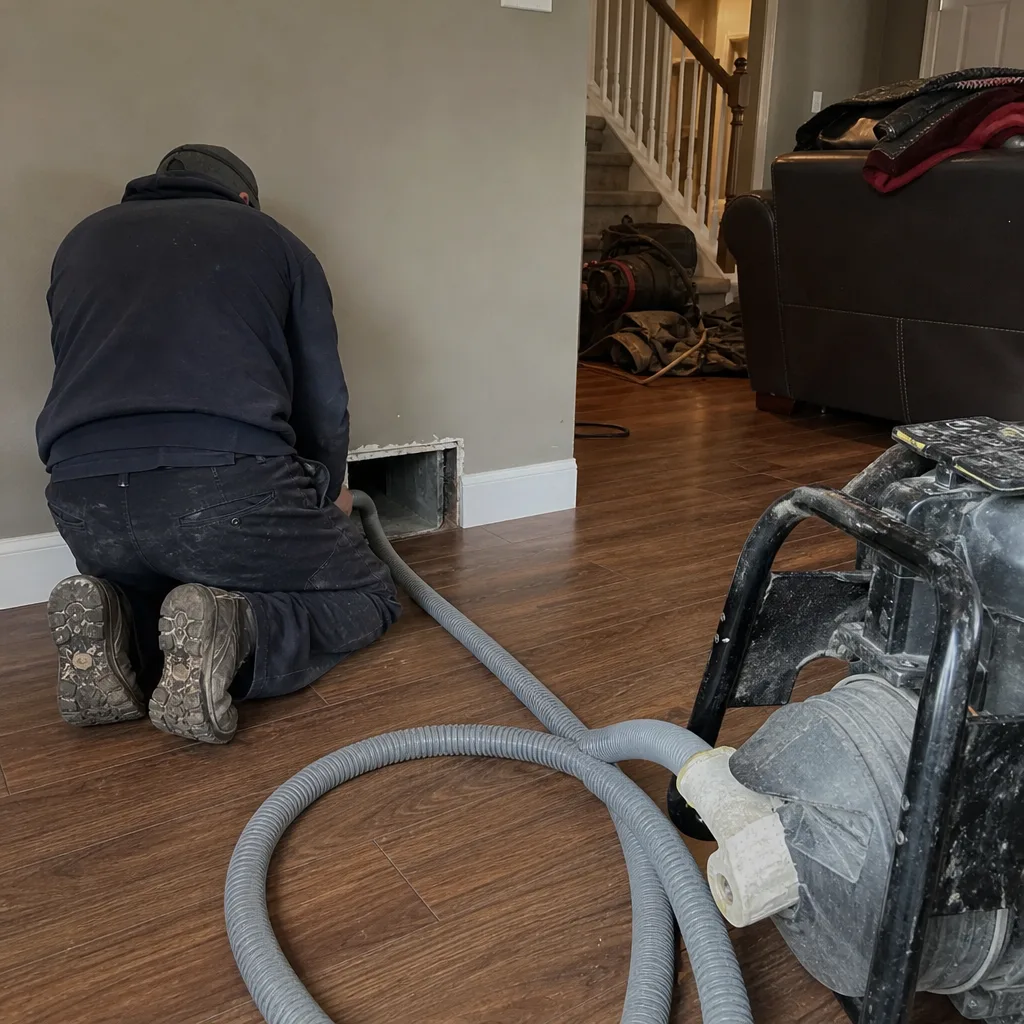 Before
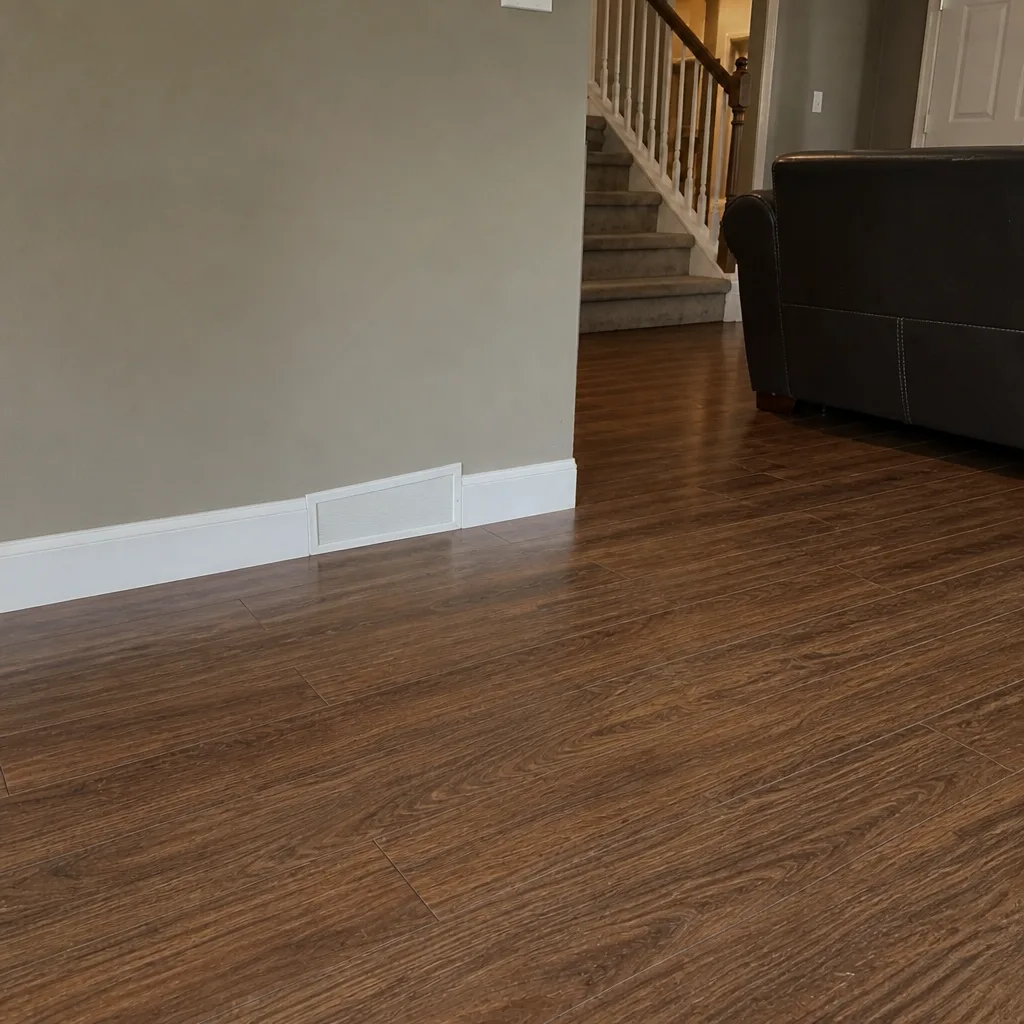 After
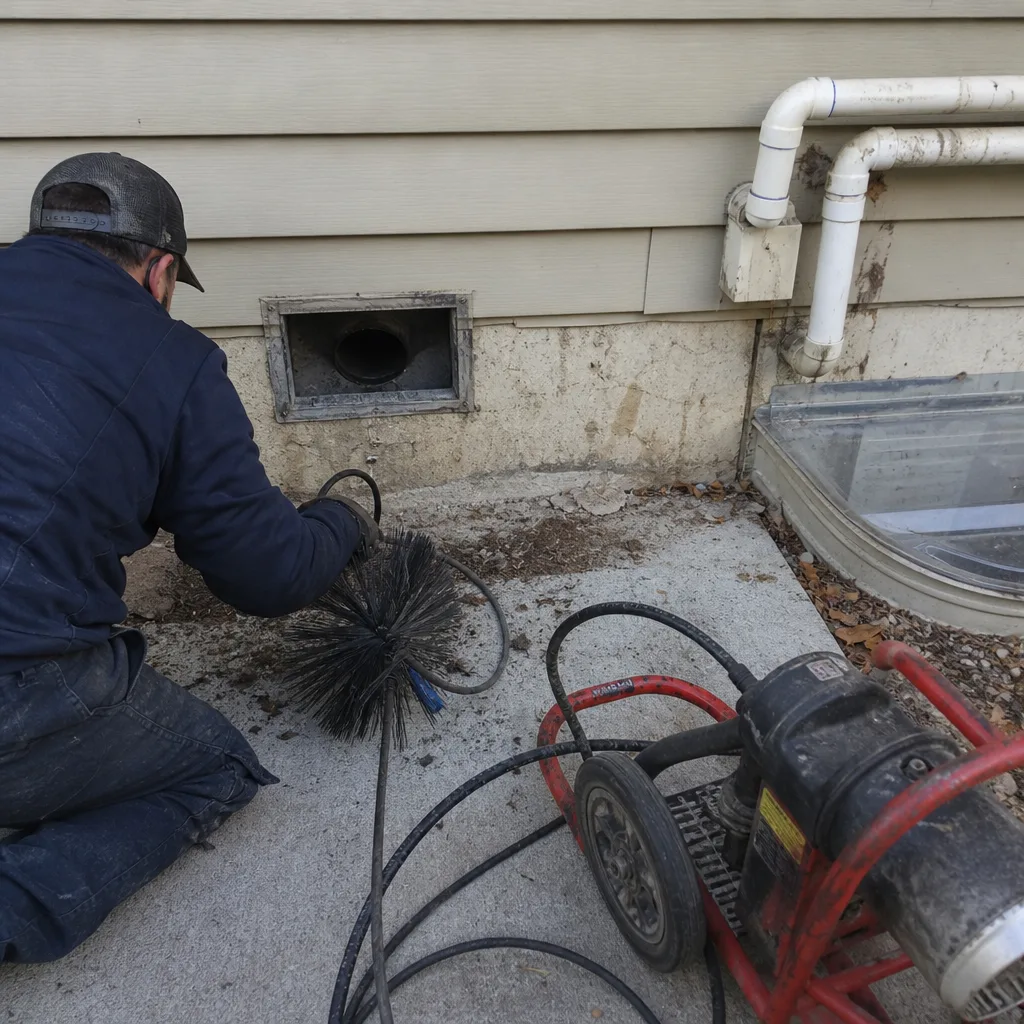 Before
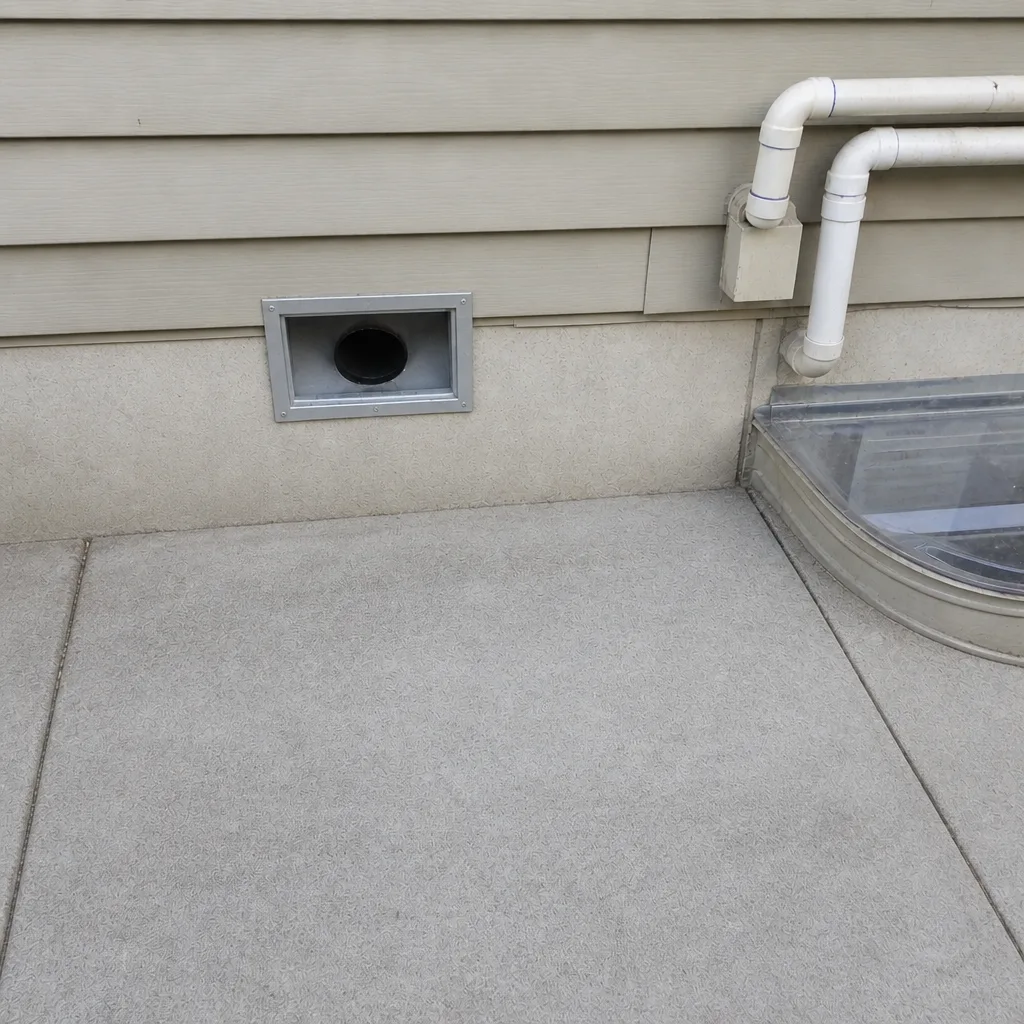 After
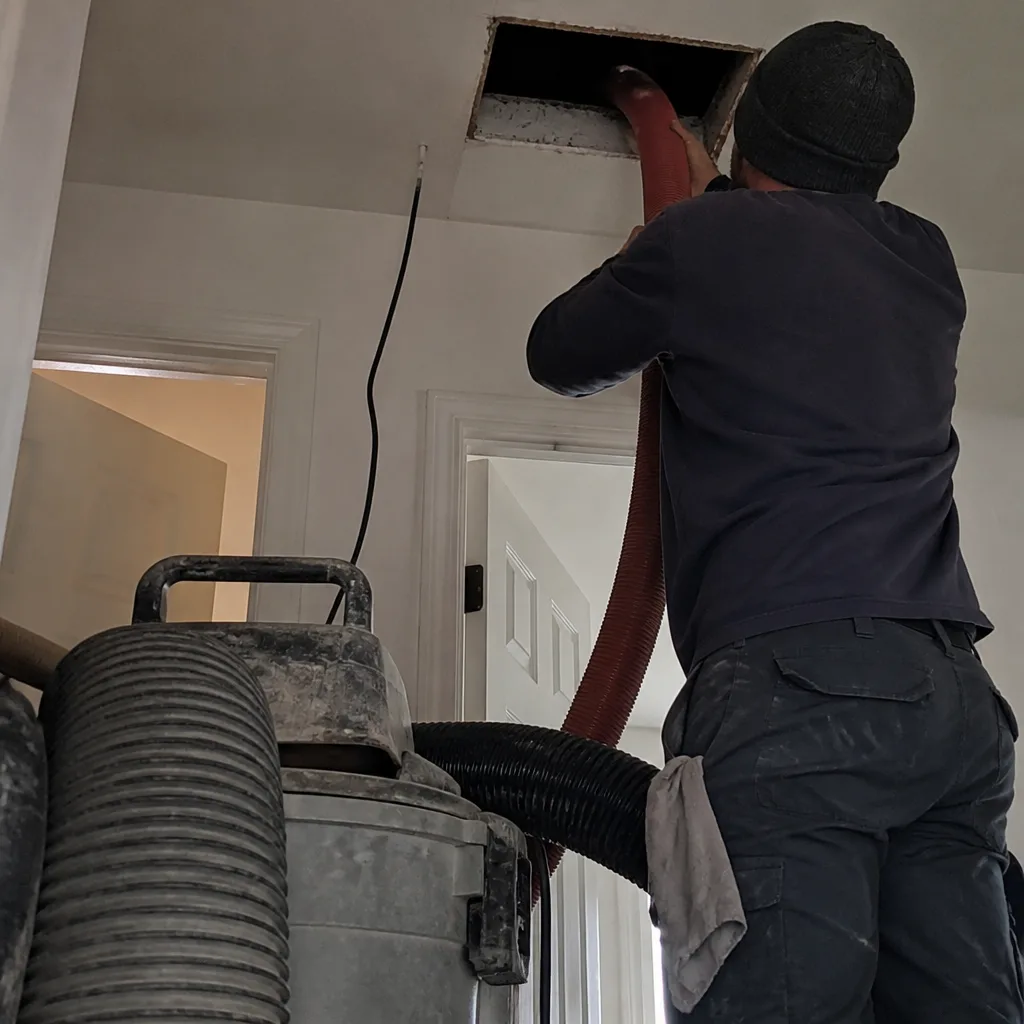 Before
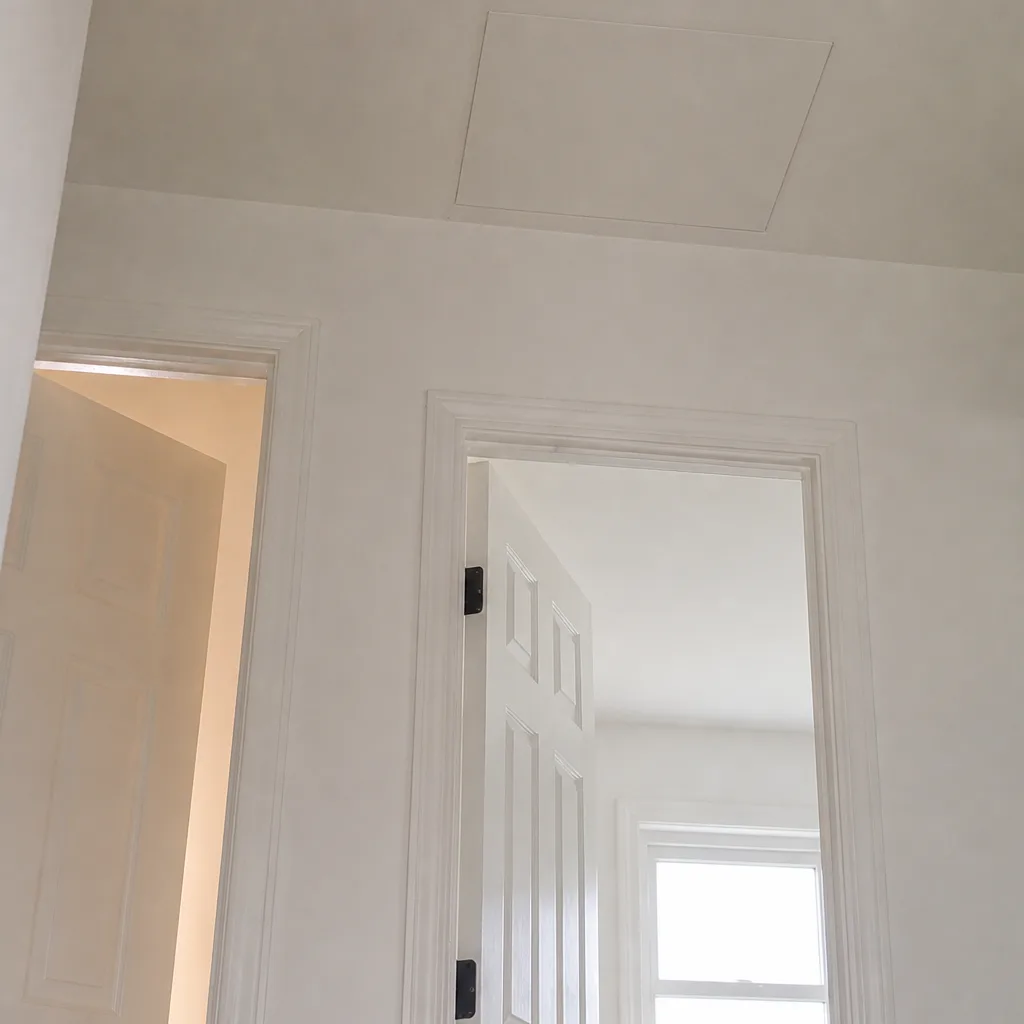 After
When to Call a Professional
The checklist above covers most of what a homeowner can watch. There are specific scenarios where the next move is a professional visit: static pressure that climbs without a filter cause, a room that’s lost airflow, visible dust lines around the register frame suggesting a duct separation, a dryer vent you haven’t run a cleaning through, and any home that’s just finished its first two years in a new build. Our technicians have up to 10 years of experience, and we carry professional-grade Rotobrush and Nikro equipment as well as Honeywell and Aprilaire filtration products, so cleaning, sealing, and filtration all get handled under one visit. Herriman Air Duct Cleaning offers free estimates in Herriman at (844) 625-7619. Call (844) 625-7619. We answer 24/7. Fast dispatch from 7am to 7pm, Sunday through Friday.
Frequently Asked Questions
Most Herriman homes do well on a cleaning every three to five years, and homes near active construction or with allergy-sensitive occupants often do better on a two-to-three-year cycle. If you’ve logged rising static pressure or noticed dirty registers reappearing quickly after cleaning, that shorter window is worth adopting. Call (844) 625-7619 for an exact quote; estimates are free.
Pricing is set per job by a written estimate after a walk-through, so it depends on your system’s size, the number of runs, accessibility, and whether repair or sealing is needed. We don’t do per-vent pricing, and there’s no teaser figure that turns into a bigger invoice once the technician is on site. Call (844) 625-7619 to book a free estimate.
Cheap quotes usually reflect what the equipment can actually reach. Consumer-grade or entry-level vacuums pull dust from the closest two or three feet of each run, and the estimate looks small because the job is smaller than it appears. Rotobrush and Nikro equipment agitate and extract through the full run, and that difference isn’t visible in the sticker price. Ask what equipment is used before comparing quotes.
The right check is before-and-after photos of your own ducts, not a generic cleaning certificate. Ask for photos of the trunk and a few representative runs at the start and end of the visit. A crew confident in professional equipment has no reason not to show you. Call (844) 625-7619 for an exact quote; estimates are free.
Yes, new construction leaves debris in the system. Drywall dust, framing dust, and material fragments settle into the runs during the build and stay there even after the home passes its final inspection. The first two years are when cleaning is most effective, because the debris hasn’t yet bonded to the duct lining. Call (844) 625-7619 to book a first cleaning.
Duct cleaning covers the ducts, registers, and boots, the pathways that carry air through the home. HVAC cleaning covers the air handler, evaporator coil, and blower, where air gets conditioned. Both matter, and skipping either leaves part of the system untouched. Herriman Air Duct Cleaning handles both under one company, along with duct repair and sealing and air quality sanitizing, so a walk-through can flag whichever one you need first.
The Bottom Line
Duct maintenance in Herriman isn’t about a date on the calendar. It’s about a quarterly register walk-through that catches changes early, a filter log tied to the seasonal air you’re actually breathing, a flex duct watch for the sagging and separation that plagues long runs in newer homes, and a static pressure log that turns airflow into measurement. Sequence professional cleaning around system changes, not around the calendar. When something on the list raises its hand, that’s the moment to schedule a visit. Call (844) 625-7619 for a free estimate. We answer 24/7. Fast dispatch from 7am to 7pm, Sunday through Friday.
Written by the team at Herriman Air Duct Cleaning.